


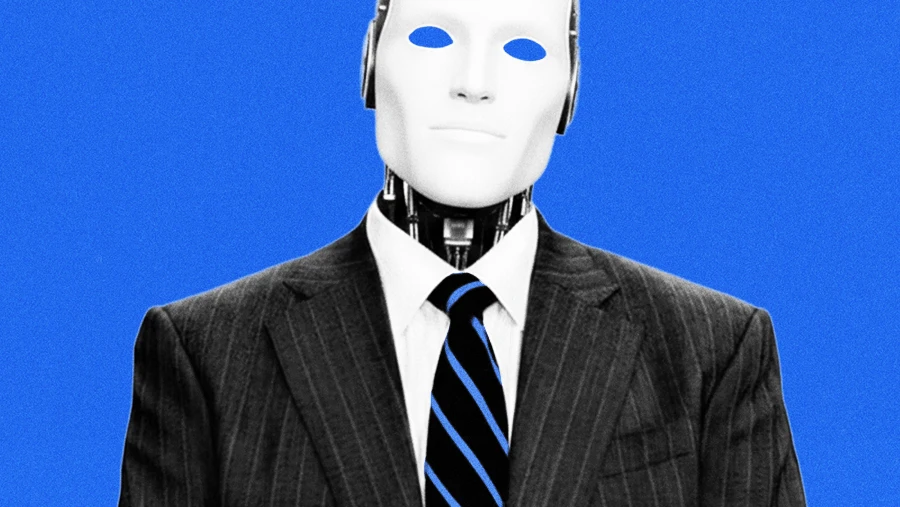


Good morning. You know you’ve reached peak absurdity when a struggling shoe company pivots to AI and its stock shoots up 582% in a day. Allbirds, famous for minimalist wool sneakers, now wants to become NewBird AI. After unloading most of its footwear IP for $39 million, the company secured $50m to buy GPUs and start renting out compute. If this works, expect Crocs to announce quantum computing next week.
Corporate AI adoption is picking up speed. Just a few months ago, economists were questioning if AI was providing any lift to productivity. Now, a Morgan Stanley analysis finds 25% of S&P 500 companies openly talking about measurable AI results on investor calls. Tech leads the way, with 42% reporting real benefits like using “vibe coding” to cut demand for software engineers. Finance is close behind, with 40% highlighting tangible gains. Vanguard economist Kevin Khang says AI adoption has rapidly become every CEO’s top priority. But let’s be real. Companies investing billions have every incentive to hype even the smallest wins. (Axios)
The dirtiest secret in AI is that agents can’t finish the job. A new research paper from UW Madison, Berkeley, and Georgia Tech reveals that today’s top AI agents handle short tasks fine, but quickly fall apart when jobs require multiple, connected steps. Using a benchmark called HORIZON, researchers ran over 3,100 tests and saw agent performance collapse as task complexity grew. The main problems? Poor planning, forgotten constraints, memory limits, and small mistakes that snowball. Businesses need agents smart enough to complete entire workflows without losing track of what just happened. The next wave of agentic AI belongs to whoever teaches agents to finish the damn job. (arXiv)
There’s a shortcut to ship scalable AI agents. Google Cloud’s Startup technical guide gives you pre-built frameworks to design, build, and deploy intelligent autonomous systems faster.
Inside the guide, you’ll discover:
- Frameworks to accelerate autonomous agent design from day one
- Best practices for prompt engineering workflows
- Frictionless deployment strategies using Google Cloud infrastructure
The economics for orbital datacenters don’t work. Launching hardware into orbit currently costs about $7,000 per kilogram. Orbital’s CEO admits the math only makes sense if the cost drops closer to $10 per kilogram. At today’s prices, the entire concept is pure fantasy. Even then, Orbital would have to hitch rides with competitors like SpaceX and Blue Origin, who both have orbital datacenter ambitions of their own. Gartner analyst Bill Ray calls the whole idea “peak insanity.” Which is probably why investors like a16z are throwing money at it. It’s not rocket science, just basic math. (The Register)
AI privacy is becoming a growth problem. A new MIT study found 77% of people don’t know how companies use their data, and 59% are uncomfortable having their data used to train AI. That’s a huge consumer trust issue, and a big business opportunity. Companies want smarter, more personalized AI that’s useful rather than annoying. But that only works if people trust you enough to hand over clean data. The whole idea that privacy is some legal side quest is nonsense. Privacy is the product. It’s the trust layer under the entire AI stack. Fail at privacy, and your AI never gets good enough to matter. (MIT)
Where Autonomy Signals Come Into Focus
Robotics and autonomous systems are shifting to deployment. XPONENTIAL 2026 convenes founders, investors, operators, and policymakers across every domain. See live tech and track where adoption and scale are accelerating.
Authenticator apps give a false sense of security. Millions trust MFA apps like Google Authenticator and Authy to keep their data safe. But new research shows attackers can crack MFA codes just by observing past ones. In tests, researchers predicted future codes with up to 96% accuracy. That’s better than random guessing. The vulnerability lies in algorithms that aren’t nearly as random as we thought. MFA’s core promise of protecting you from hackers now looks dangerously weak. Your authenticator app could be giving hackers a head start. (PDF)
fun stats
🗣️ 51%. B2B software buyers who now begin their research with AI chatbots vs Google, up from 29% just 11 months ago.
⏰ 8 hours. Weekly time wasted by half of US employees using AI at work, according to a new Gallup poll.
🚀 $100 billion. What Google’s $1B SpaceX investment from 2015 could be worth after the company IPOs this year. That 100x return is roughly equal to Kenya’s entire GDP. Not bad.