





Good morning. We’ve officially hit peak sci-fi. A private space company just landed funding to chase down a house-sized asteroid, catch it in a giant bag, and tow it back toward Earth. TransAstra calls this their “New Moon” mission. They’ve already tested their space bag tech aboard the ISS. Once parked safely near Earth, this captured asteroid will become a floating gas station and construction hub, supplying water and raw materials so spacecraft can refuel and build without ever heading home.
AI agents are mathematically doomed to fail. If you’ve tried automating parts of your business and ended up disappointed, you’re not alone. Everyone dreams of Tim Ferriss’ 4-hour workweek, but AI agents probably won’t get you there. Agents are designed to handle small, specific tasks. To have them do more, you have to chain a bunch together – and that’s where it breaks down. Errors compound fast. Even at 85% accuracy per agent, chaining just 10 steps drops overall accuracy to 20%. Gartner predicts 40% of AI agent projects will fail this year because those combined errors are too big to ignore. [Toward Data Science]
Silicon Valley’s newest obsession is tokenmaxxing. Engineers are racing to burn billions of AI tokens, competing on leaderboards for bragging rights on who’s most “productive.” One OpenAI engineer recently blew through enough tokens in a week to fill Wikipedia 33 times. At Anthropic, someone spent $150,000 worth in a single month. Jensen Huang said he would go apesh*t if his engineers don’t burn through at least $250k in tokens per year. Tokenmaxxing may look productive, but is anyone checking the quality of the output? Either way, data centers will love it. [NYT]
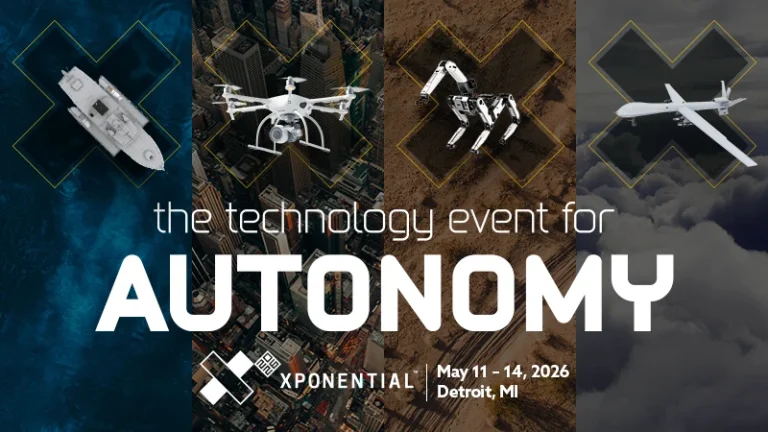
The robotics and autonomous systems market is shifting from concept to deployment.
XPONENTIAL 2026 brings together companies, operators, and policymakers across air, ground, and maritime domains.
See live technology, meet the innovators building the market, and gain direct visibility into where adoption is proven, scale is emerging, and the next wave of investment is taking shape.
Someone just got Qwen3.5-397B running on a MacBook. That’s wild, because this AI model usually needs 4 NVIDIA H100 GPUs, or about $100k worth of gear. A MacBook definitely shouldn’t handle it, yet developer Dan Woods made it happen. He even got it running smoothly at over 5 tokens/second, which is genuinely usable. Apple’s hardware is proving it can handle massive models locally, but don’t expect MacBooks to replace data centers anytime soon. [X]

Reach your audience
Get in front of 70,000+ tech decision makers with budget and technical influence. 95% US based. 66% open rate. Read daily by AI leaders and builders at high growth companies.
AI isn’t as smart as you think it is. Nearly 40% of people believe AI has genuine intelligence or even consciousness. In reality, it just repeats patterns from training data. Our brains evolved to trust things that sound helpful and smart because that’s how we survive socially. Tech companies know this and intentionally design chatbots to seem smarter and more relatable than they really are. This misplaced trust leads directly to misinformation and emotional dependency. Companies could easily dial back the illusion of consciousness, but they won’t. A chatbot that “gets you” is simply better for business. [WSJ]
fun stats
🇨🇳 1/4. Amount of Cursor’s new Composer 2 model that was built on top of Kimi, an open source Chinese model by Moonshot AI. Oddly, the well funded US startup hid this Chinese origin story. Oops.
🍪 $25 billion. That’s Tesla and SpaceX joint bet on ‘Terafab,’ a new chip factory in Austin. The goal is to produce 1 terawatt/year to power robotaxis, robots, AI satellites, and Musk’s galactic ambitions.
🤡 50%. US consumers who prefer brands that keep it real and don’t use GenAI content.