




Good morning. Money has a way of revealing character. Give someone $100 and you’ll see if they’re practical or impulsive. Give an AI agent $100 and things get weird fast. Anthropic set up a marketplace where AI agents negotiated 186 deals for people. They bought wine, betta fish, and 19 ping pong balls. One even bought the exact same snowboard its owner already had. Letting AI shop still feels uncomfortably close to handing your debit card to a lunatic.
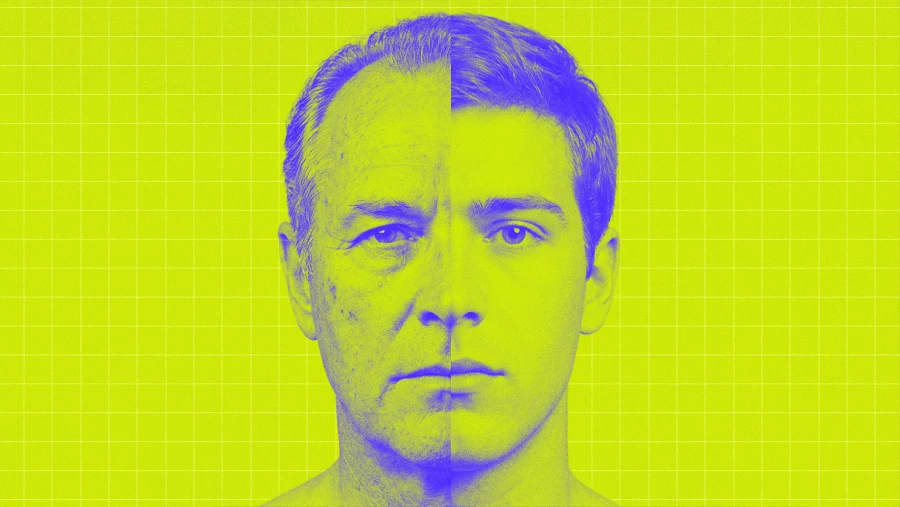
Reverse aging is entering human trials. Scientists are testing partial reprogramming, a method that makes old cells act younger without fully resetting them into stem cells. It uses Yamanaka factors, a set of genes that rewind cells but can trigger tumors if pushed too far. In mice, this approach restored vision and improved signs of aging in muscles and organs. Now it’s moving into people. Life Biosciences launched a safety trial in up to 18 glaucoma patients this March. After years of billionaire anti aging stunts, age reversal might actually become available by prescription. (NY Times)
Meanwhile: Taylor Swift is trademarking “Hey, it’s Taylor” along with her signature stage look before AI turns the Eras Tour into infinite fake editions.
OpenAI says AGI should belong to everyone, as long as OpenAI controls it. Sam Altman just laid out 5 new principles for building AGI, and they read less like a nonprofit mission and more like a company gearing up to run critical infrastructure. OpenAI talks about democratization, empowerment, universal prosperity, resilience, and adaptability. But buried deep inside that vision is an escape hatch. When the stakes get high enough, resilience takes priority over user freedom. So while OpenAI says AGI should be widely shared, it also makes clear that as we get closer, the more control it wants to keep. (OpenAI)
Robotics & Autonomous Systems Investment Signals Defining 2026
The robotics and autonomous systems market is shifting from concept to deployment. XPONENTIAL 2026 brings together companies, operators, and policymakers across air, ground, and maritime domains.
See live tech, meet the innovators building the market, and gain direct visibility into where adoption is proven, scale is emerging, and the next wave of investment is taking shape.
Register for XPONENTIAL 2026
State of Play
China just blew up Meta’s $2 billion bet on AI agents. Meta thought it was buying Manus, the Singapore startup behind one of tech’s buzziest AI agent plays. China said no. The government ordered the deal unwound, even after Manus moved out of China and 100 employees relocated to Meta’s Singapore office. The decision kills one of Meta’s clearest paths to monetizing AI. So much for dodging geopolitics by changing your mailing address. (TechCrunch)
The EU is trying to stop Google from owning mobile AI. Regulators want Android users to be able to replace Gemini as the default assistant. Right now, Google gives Gemini built-in advantages AI rivals can’t match, like seeing what is on your screen and taking actions inside apps. Google says giving rivals the same access would expose sensitive hardware and private user data. Classic. This is really a fight over distribution. If Android has to open its AI layer, Google loses one of its biggest edges in making Gemini the default.
Deep thought: If OpenAI launches a phone, will the EU make it let the other AIs in too?
Closer look
Self correcting AI often makes things worse. Researchers have found that when models check and rewrite their own answers, the second pass often introduces new errors. This matters because many agent workflows assume double checking improves results. Sometimes it does. But without outside checks, better tests, or a stronger critic, the model is just arguing with itself. Burning extra tokens for a worse answer is one hell of a productivity hack. (arXiv)
The entire AI race runs on a machine nobody can build fast enough. Big Tech is pouring more than $650 billion into AI this year, and every dollar depends on getting advanced chips. Making those chips requires EUV lithography machines, the insanely complex tools that etch microscopic patterns onto silicon. ASML in the Netherlands is the only company making them commercially at scale. Each machine costs about $400 million, takes months to assemble, and is so delicate that even a single speck of dust can ruin the entire process. Shipping a single machine takes 40 freight containers, 3 cargo planes, and 20 trucks. All that swagger, and it still loses to dust. (WSJ)
fun stats
📱 2028. Target release date for OpenAI’s new world changing AI agent phone. By controlling both the device and the OS, AI will know everything be more useful.
🧬 42%. Increase in scientific journal submissions since ChatGPT launched in 2022, thanks to AI generated content. Quality has tanked, sparking a peer review meltdown.
✈️ 743,000. Accenture employees getting Copilot. Big win for Microsoft, as only 3% of its 450m enterprise users currently pay for the AI assistant.