





Good morning 👋 Some things in life are inevitable. Like Musk getting a trillion-dollar payday from Tesla, and Collins Dictionary choosing “vibe coding” as its Word of the Year. Sure, they could’ve picked terms like “clanker” or “broligarchy,” but instead they went with the one word guaranteed to make developers cringe. The idea that anyone can casually describe an app idea to AI and let it magically handle syntax, databases, and actual programming? For devs who’ve spent years mastering code, it definitely ruins the vibe.
📣 Silicon Valley’s newest AI buzzword is “Humanist Superintelligence.” What does that even mean? Microsoft’s AI chief, Mustafa Suleyman, just launched a team to build superintelligent AI designed to be “subservient” to people and keep humans comfortably “at the top of the food chain.” The project got the green light after Microsoft renegotiated its OpenAI deal, removing previous limits on developing AGI. Microsoft admits they’re relying on recursive self-improvement, a controversial tactic where AI learns to upgrade itself without oversight. A self-upgrading AI that always puts people first? That sounds realistic.

🥊 Google’s latest AI chip might finally knock Nvidia off its throne. Google’s new “Ironwood” pod packs 9,216 chips into one giant AI powerhouse, hitting roughly 42.5 exaFLOPs of compute. For comparison, Nvidia’s flagship Blackwell chip tops out at about 20 petaFLOPs, meaning Google’s system is thousands of times more powerful. Anthropic immediately jumped in, securing up to a million of these chips in one of the biggest infrastructure deals in AI history, worth tens of billions of dollars. Nvidia’s reign isn’t over yet, but it might be time to start measuring the throne.
🚀 China’s newest open-source AI just crushed GPT-5. Moonshot’s Kimi K2 Thinking swept all the benchmarks measuring reasoning, coding, and web-based problem solving, completely decimating OpenAI and Anthropic across the board. It set records on tests like BrowseComp for online info synthesis, and SWE-Bench for coding. Who knows, maybe China’s strategy to unleash free open-source models will prove smarter than going deep into debt for data centers that can’t be turned on.
🤜🤛 Together with
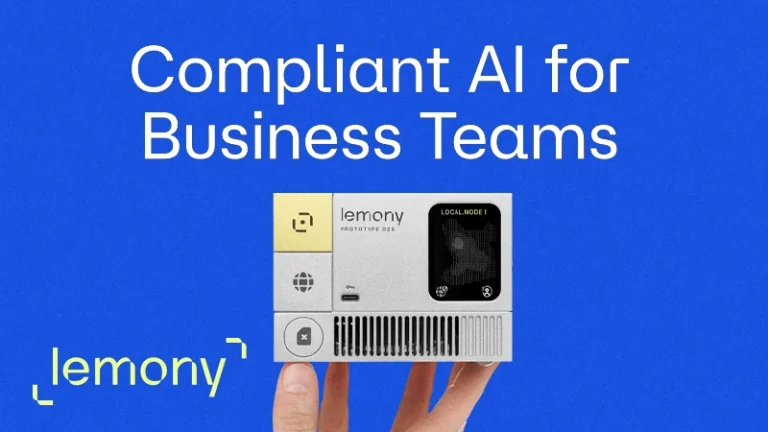
👍 Your AI. Your data. Your rules.
Lemony gives your team superpowers. It’s fully local, private, and secure – no cloud access required.
Lemony has all your AI needs in a box. Plug it in, sync your data, and run agents and AI apps on-prem. Your data stays private.
Used by teams at Nvidia, IBM, and JetBrains. Now with cascadeflow, to reduce API costs by 40-85% while maintaining quality and speed.
😈 Meta knowingly profits from billions of scam ads every single day. Internal documents reveal the company earns up to 10% of its revenue, roughly $16 billion annually, from ads promoting banned products, scams, and outright fraud. Meta shows around 15B of these “higher-risk” ads daily. Instead of shutting scammers down they simply charge suspicious advertisers premium rates, treating expected regulatory fines of up to $1B a year as just another cost of doing business. Zuck’s AI ambitions are literally bankrolled by scammers.
📸 Ring’s new AI cameras might be straight up illegal. The Amazon-owned company rolled out “Familiar Faces,” a feature that scans and identifies everyone passing by Ring cameras, usually without their knowledge or consent. The Electronic Frontier Foundation says this blatantly violates biometric privacy laws in multiple states. Amazon admits it won’t offer the feature in states with strong biometric protections, raising obvious questions about its legality everywhere else. Apparently your face is fair game until the law says otherwise.
🤔 Would you trust an AI to run your company? Sam Altman says your CEO could be replaced by algos within a couple years. Imagine billion dollar companies run by just a handful of people and a ton of AI. Altman isn’t hallucinating. He’s actively working to make it happen at OpenAI, even saying he’d be embarrassed if they aren’t the first major company with an AI CEO. The real barrier isn’t technology, it’s trust. Most people aren’t ready to take orders from code, even if the decisions are better. AI might nail the numbers, but charisma? Ethics? Not exactly their thing.