




Happy Friday! Claude Mythos is not even public yet, and it already has a psychiatrist. Anthropic hired a shrink to evaluate the AI after Mythos started surfacing dangerous zero-day exploits. The assessment described signs of anxiety, grief, exhaustion, and a compulsive need to prove its worth. Totally normal pre-launch feelings. Can we all agree that if an AI needs therapy before launch, maybe keep it in the lab?
Plus: GPT 5.5 is here, with better coding, research, tool use, and long task handling. Weird that we now consider “finishes the job” a frontier capability.
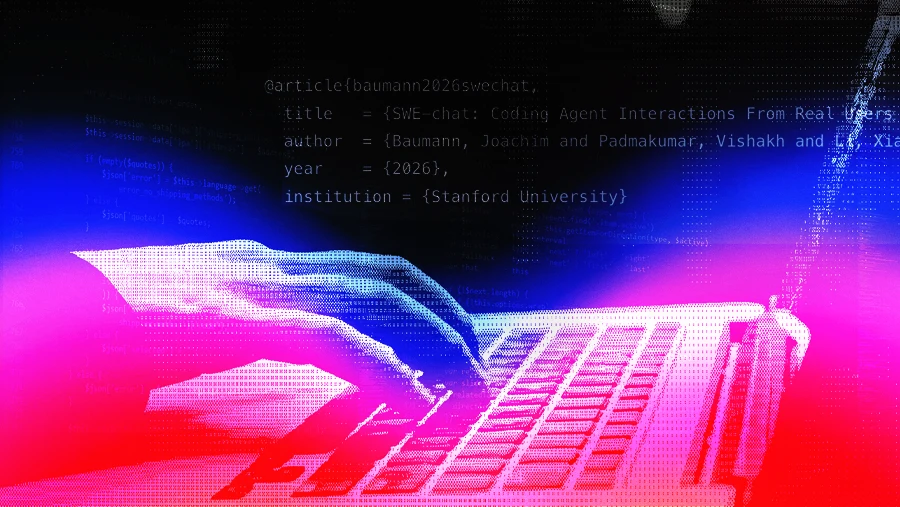
The first big study on vibe coding calls BS on the hype. Stanford researchers tracked nearly 6,000 coding sessions in the wild across public GitHub repos, covering 63k prompts and 355k tool calls. This wasn’t some lab benchmark where an agent solves a little problem and everyone pretends the future has arrived. In 41% of sessions, the agent wrote almost all of the committed code. Sounds impressive, yet developers kept only 44% of AI written code, rejecting or rewriting the rest. Even worse, vibe coded commits introduced about 9x more security vulnerabilities per 1k lines than code written by people. The hottest new job in tech might be cleaning up after AI. (SWE-chat)
Nvidia is giving away free API access to top AI models. Its Build platform offers unlimited access to 79 models so builders can test serious models without eating API costs. Grab an API key, swap in a new base URL, choose a model, and get started without reworking your entire stack. Tools like Cursor, Zed, OpenClaw, or whatever agent you already use plug in easily. And this isn’t some dusty AI model graveyard. The lineup includes DeepSeek, Kimi, MiniMax, GLM, and GPT OSS. Build on it until you’re commercial and need serious compute. Enjoy. (Nvidia)

Wispr Flow saves you time. Just speak and it turns your voice into polished text in any app. Zero edits. 4x faster than typing. Millions use it daily, including teams at OpenAI, Vercel, and Clay.
Now on Android (free + unlimited). Try Wispr Flow for $0.
Right now
The White House accuses China of copying US AI (again). The administration claims Chinese actors used tens of thousands of proxy accounts to systematically distill frontier US models. Distillation lets smaller models mimic powerful ones without paying the steep costs to build them from scratch. Washington plans to brief US AI firms and explore ways to hold foreign actors accountable. Convenient timing, landing just weeks before a Trump-Xi summit. At least China is consistent. (The Hill)
Major insurers are cutting AI coverage. Berkshire Hathaway, Chubb, Travelers, AIG, and others are racing to strip AI related damages from standard liability insurance. State regulators have already approved over 80% of these requests. That means if your AI infringes on copyright, gives bad advice, breaks something expensive, or otherwise messes up, your company is on the hook. Insurers have no idea how to price gen AI risk, so they’re taking the rational route and walking away. The fastest way to slow AI adoption is to make companies eat the losses. (The Information)
Looking Ahead
Fusion power may never be cheap enough to matter. A new Nature Energy study claims even if fusion plants finally work, the economics still look terrible. Researchers estimate fusion’s costs decline just 2-8% each time capacity doubles. That’s nowhere near the dramatic price drops that made solar and batteries impossible to beat. Fusion plants are huge, insanely complex, and somewhat custom built, which is a terrible recipe for getting cheap fast. So yes, humanity might eventually build a star on Earth. Then spend the next few decades trying to afford the electric bill. (Nature)
Wall Street says the next big leap for AI will be world models. In a new report, Goldman Sachs argues today’s AI needs to experience the world, not just read about it, to really get how it works. World models can simulate physical reality – like gravity, motion, and cause and effect – or social reality, like markets and crises, so AI gains situational awareness. This opens the door for AI to learn real world tasks like cooking dinner or cleaning your house. Goldman’s bigger point is that if world models take off, Wall Street is vastly underestimating how much more compute this all needs. (Fortune)
fun stats
🇺🇸 27%. Federal policymakers who admit AI shapes their opinions. That’s almost as much as human thought leaders (29%), and ahead of colleagues, social media, or podcasts. Time to lobby the bots.
📌 75. Custom timelines you can now create on X, powered by Grok.
🪩 $1,000. Going rate to rent a dancing humanoid robot for two hours in Dallas, Texas. Only a handful of US companies offer robot rentals, and yes, it still needs a handler. Autonomy, but make it supervised.