




Good morning. Worried computers are taking over? Humans might finally reclaim some territory, in a really weird way. Australian biotech startup Cortical Labs is building data centers powered by human brain cells. Yes, really. These futuristic facilities in Melbourne and Singapore are swapping energy-hungry GPUs for uber efficient biological computers called CL1 units. Too soon to say if neurons beat silicon, but at least we won’t have to call it artificial intelligence anymore.
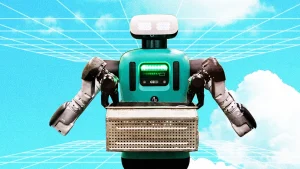
Humanoid robots are clocking in at small-town factories. At an auto parts plant in Cheraw, South Carolina (pop. 5,000), a robot named Digit loads heavy metal baskets onto a conveyor belt. Just a year ago, this was someone’s full-time job. Only Digit costs around $10/hour to run, versus $20/hour for entry-level workers. Eventually the bot could cost just $2/hour. Today fewer than 200 humanoids work factory floors worldwide, but by 2040, that number is expected to hit 5 million. Small towns will feel the impact first, as physical AI reshapes local economies and rewrites the rules between capital and labor. It’s hard to compete with something that never clocks out. [WSJ]
Now hiring: improv actors to teach AI emotional authenticity. AI labs are racing to make voice and video interactions feel more believable. To do it, they’re hiring professional actors to train AI models on what real emotions look like. Performers are paid an average of $74/hour to act out unscripted video scenes, showing how people genuinely express and shift between feelings in real time. Demand is so strong that Handshake has already hit a $150 million run rate providing human data. Improv actors finally have steady work, at least until AI figures out comedy. [Verge]

Stuck in back-to-back meetings? Most notetakers just summarize what was said. Granola transcribes everything without a bot on the call, then merges it with your notes into a clean summary.
Chat with your notes to draft emails, prep for followups, and more.
Three teenagers built a billion-dollar AI startup. Instead of heading to college, they founded Aaru, a platform using thousands of AI agents to simulate surveys and focus groups. Aaru creates realistic consumer profiles from detailed demographic and psychographic data, matched directly to clients’ target markets. Their AI predicts what people will buy, how they’ll vote, which marketing slogans resonate, and even what products to launch next. Big names like McDonald’s, Coca-Cola, Boston Beer, and Bayer are already on board. Not everyone’s convinced synthetic data beats real opinions, but Aaru’s founders (ages 18, 19, and 15) convinced investors it’s worth a billion-dollar bet. [WSJ]
A tech founder used AI to invent a cancer vaccine for his dog. In 2024, Paul Conyngham learned his dog Rosie had cancer and standard treatments weren’t working. With zero medical experience, he turned to ChatGPT, which pointed him toward immunotherapy research at the University of New South Wales. After sequencing Rosie’s DNA and pinpointing targets using Google’s AlphaFold, UNSW scientist Pall Thordarson developed a custom mRNA vaccine. Rosie got her first dose last December, and by February her tumors had shrunk dramatically, putting her back in rabbit-chasing mode. Researchers say her case proves AI-driven treatments could soon go mainstream. [Fortune]

Reach your audience
Get in front of 70,000+ tech decision makers with budget and technical influence. 95% US based. 66% open rate. Read daily by AI leaders and builders at growing companies.
Autonomous labs are reinventing biology. OpenAI and Ginkgo Bioworks teamed up to build an automated lab system that runs biological experiments entirely on its own. GPT-5 designs the tests, robots execute them, and the AI uses the results to plan the next round. After two months and 36,000 protein-production experiments, the setup cut costs almost in half. Ginkgo is now offering commercial access for as little as $39 per experiment. Even the Department of Energy is jumping in, planning a huge 97-robot autonomous lab by 2030. Biology just got its self-driving moment. [Sci American]
xAI is rebooting because it “wasn’t built right.” After three years of constant reshuffling, Elon’s AI lab still struggles to deliver. Its coding tools lag behind rivals like Claude Code and Codex, and two more co-founders just walked out, leaving only two original members standing. Tesla execs stepped in to evaluate employees and stabilize the business. Even Macrohard, xAI’s attempt at automating white-collar work, barely launched before hitting pause. No word yet on how this affects the upcoming Optimus 3, but investors might soon reboot their expectations too. [TechCrunch]
fun stats
🕳️ 75%. Resumes that are never seen by a human due to AI filtering.
⌚ 16 minutes. Total time AI saves execs every week, despite 89% of execs saying they feel more productive. Why? AI accelerates creation, but needs to be reviewed, fact checked, and fixed.
💡 $11/month. One developer’s electricity cost to self-host SaaS on three mini PCs. No AWS, Vercel, or monthly cloud bill.