





Good morning. Every new AI tool eventually splits into two categories: the ones that promise productivity, and the ones that turn the whole thing into a joke. A new GitHub plugin called Endless Toil makes your AI coding agent emit escalating human groans as it reads your work. The worse your code, the louder the suffering, ranging from gentle sighs to dramatic wails of anguish. It even works with Claude and Codex. Somewhere, a senior engineer feels seen. (GitHub)
The future of tech might live in a Texas trailer park. Just outside Austin, hard tech founders are building Proto-Town: a 1,200-acre campus where ‘startup cowboys’ live on site and test their products in the real world. Members are drawn by cheap land and a build-anything vibe. It’s less business park and more commune, complete with shared meals, dirt bikes, man camps, barbecues, and young founders working sunrise to sundown. They’re building giant cargo drones, autonomous excavators, and even a test nuclear reactor. More robotics, energy, defense, and manufacturing startups want space to build things, and Texas is open. Nice to see startups swap out the pitch decks for excavators. (WSJ)
AI is creating a new class of medical DIYers. We’ve all heard the story about the guy who used AI to treat his dog’s cancer. He’s not alone. Tech founders and desperate patients are now turning to AI when doctors run out of ideas or time. One CEO used AI to map out a custom strategy for his wife’s recurring brain cancer, but testing it would cost over $250,000. GitLab cofounder Sid Sijbrandij says AI identified treatment options his doctors overlooked, partly because doctors are stretched thin. The problem is these AI generated plans remain expensive and hard to turn into real treatments. AI might give us personalized medicine, but only if you’re willing to do the research. (The Information)
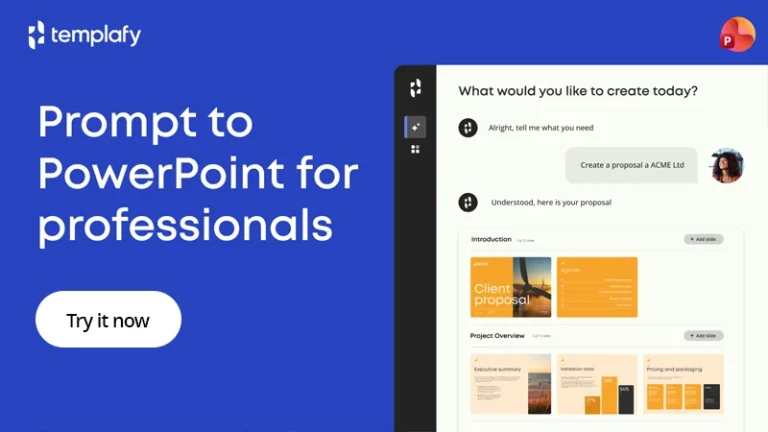
Templafy’s Document Agents follow your brand and compliance rules, turning AI from a risk into a reliable teammate. No rogue slides. Every presentation is accurate, polished, and ready for the outside world – automatically.
- Trusted by 4M+ users and teams at KPMG, Adobe, CISCO
- 30% of document time saved
- Works inside PowerPoint, Google Workspace, and Salesforce
Right now
Does AI cost more than employees? At some companies, the AI bill is already blowing past payroll. Nvidia’s Bryan Catanzaro told Axios his team’s compute spend is “far beyond” what they pay their people. Uber’s CTO reportedly burned through their entire 2026 AI budget early because token costs spiraled so quickly. Global IT spending will hit $6.31 trillion in 2026, driven largely by AI infrastructure, software, cloud services, and subscriptions. If AI bills keep rising faster than productivity, swapping workers for AI might feel less like automation and more like hiring pricier employees who still need supervision. (Axios)
AI designed drugs are headed for their first human trials. Isomorphic Labs, a Google DeepMind spinoff, wants to show AI can do more than simulate biology. It’s built on AlphaFold, the platform that cracked protein structures and opened the door to AI medicine. The company has promising AI generated drug candidates for cancer and immune diseases, and is ready to see if any of them work in people. For some patients, these untested AI treatments might be their best shot. (Wired)
Looking Ahead
AI may be too expensive to scale. SaaS companies used to print money because adding users made margins better. AI flips that model upside down. Every new user adds compute costs, which explains why Nvidia cruises along at 75% gross margins while AI startups struggle to hit 30%. In a Stanford lecture, investor Apoorv Agrawal argues this is the real shape of today’s AI market. Over the past two years, AI generated about $350b in new revenue, and semiconductor makers pocketed most of it. Silicon wins short term. Long term, the winner is whoever figures out how to scale AI profitably. Until then, we’ll all be paying rent to Nvidia. (Forbes)
Go deeper: Stanford’s MS&E 435 Economics of the AI Supercycle lecture is free on YouTube.
Can AI tell the difference between reality and nonsense? Researchers at Brown found that on a basic level, it can. In their study, larger AI models were able to sort statements into categories like normal, unlikely, impossible, and absurd. They could even tell the difference between close calls – like something improbable vs. something impossible – with about 85% accuracy. This suggests AI may be building its own rough map of reality. Always reassuring when machines start deciding what’s real. (Brown)
fun stats
🇦🇪 50%. Share of UAE federal government operations that will run on agentic AI by 2028, a global first at this scale. This should be interesting.
🏆 $5 trillion. Nvidia’s market cap as of April 25, fueled by unstoppable AI demand. The company controls over 80% of the AI chip market, making it richer than nearly every country on Earth.
🔋 1 million. Number of used EVs expected to flood the market in the next 3 years, potentially driving prices way down. In 2025, only 123,000 EV leases expired.