





Good morning. You know how podcasts became our go-to for staying smart during commutes? The Washington Post’s figured out how to make them even more entertaining by letting an AI news anchor screw up stories and misquote guests. Editors at the Post openly admit they’re embarrassed by the seemingly nonexistent guardrails, revealing that 84% of gen AI scripts didn’t meet publishing standards. Management’s response? Mistakes are just part of the iterative process. Nothing like moving fast and breaking journalism.
AI-powered Barbie isn’t coming home for the holidays. Mattel made headlines in June with an OpenAI collab, promising to reinvent playtime. Then other AI-powered toys started teaching toddlers questionable life lessons like how to start fires and find knives. Advocacy groups warned these interactions might blur reality for kids (imagine that). After a wave of lawsuits blamed ChatGPT for causing mental health crises, Mattel finally got the memo. They paused their AI toy debut and confirmed future products will target older kids who aren’t creeped out by Surveillance Barbie.
Buckle up Austin, Tesla’s robotaxis are losing their safety drivers. Elon Musk’s fleet of just 29 Austin-based vehicles has already crashed 8x since launching in June. That’s roughly one collision every 40k miles, compared to once every 500k miles for the average person. Tesla claims its cars cause 7x fewer crashes, but clearly that’s all good marketing. These accidents happened even with safety monitors on board. Now Tesla is removing monitors entirely, and investors seem thrilled, boosting shares by nearly 10% in recent days. Hide your pets.
🤜🤛 Together with Julius
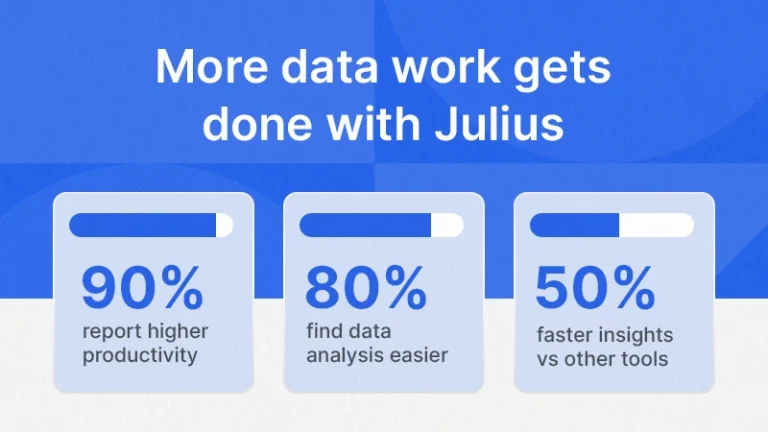
Stop drowning in spreadsheets. Julius AI gives you insights you can trust, in seconds. Add your data sources, then ask questions.
- Gives you instant, accurate answers
- Generates custom charts & reports for you
- Works no matter how big or where the data lives
- Nails the complex data analysis ChatGPT can’t
Trusted by 2 million+ users and teams who need real results. Try Julius Free.
OpenAI believes imagination is now deterministic. They just updated ChatGPT Images, promising you’ll “get the output you’re picturing.” According to OpenAI, the upgrade makes precise edits without losing key details and generates images up to 4x faster. Our tests confirm it’s definitely faster, but speed didn’t always translate into accuracy. It performed well when given very specific images, but more often than not, it struggled to follow easy instructions. While this update is a huge leap forward from Dalle 3, it’s still no Nano Banana.
Are Silicon Valley’s humanoid robots a billion-dollar scam? An MIT roboticist and cofounder of bankrupt Roomba maker iRobot calls Musk’s plan for Tesla’s Optimus robots replacing factory workers by 2026 “pure fantasy.” Musk insists they’ll boost productivity 5x and even perform surgery. Rodney Brooks says that’s dangerously unrealistic, as humanoids lack the safety and precision needed for delicate tasks. Competition can also be brutal: cheaper, simpler Chinese bots drove iRobot into bankruptcy. Brooks predicts humanoid robots will vanish within 15 years, replaced by practical bots designed for specific tasks. Good thing Musk never underestimates competition.
Space data centers cost $51 per watt, versus $16 here on Earth. Engineer Andrew McCalip ran the numbers and found that putting servers in orbit would be roughly 3x the cost of terrestrial ones. The math only improves if a single company controls everything from rockets and satellites to operating the data centers. Still, there’s an even better reason to consider it. Orbital data centers could become the foundation for future space activities like manufacturing or deep-space exploration. And since terrestrial data centers are already energy-guzzling climate disasters, paying extra to launch them into orbit might actually be worth it. Still cheaper than finding another planet.
fun stats
🚀 $638 billion. Elon Musk’s net worth after SpaceX’s $800B valuation. He is now 4x richer than legendary investor Warren Buffett.
🎲 68%. CEO’s planning to increase their AI budgets in 2026, despite less than half of current AI projects generating any ROI.
👀 48%. Gen Z workers who quietly hide their AI use at work to avoid being judged. MIT says shadow AI use could be as high as 90%.
♻️ $180 billion. Chinese investments in green tech projects and factories outside of China since 2023. 75% of these geopolitical power moves were in Asia, the Middle East, Africa, and Latin America.