



Good morning. AI surveillance sees every person as a pattern. Change the pattern and you change what the camera sees. A German designer used that weakness to create a Hawaiian shirt that makes its wearer disappear from AI cameras. Its pink, orange and green blobs break up the outline of the body so the software can no longer assemble the pieces into a person. People see an ugly shirt. The camera sees nothing at all.
In today’s dose:
- Nvidia buys Hugging Face
- Agent trading FOMO
- Robotaxis go to crash school
- Bill Gates’ warning
- Court rules deepfakes of minors ok
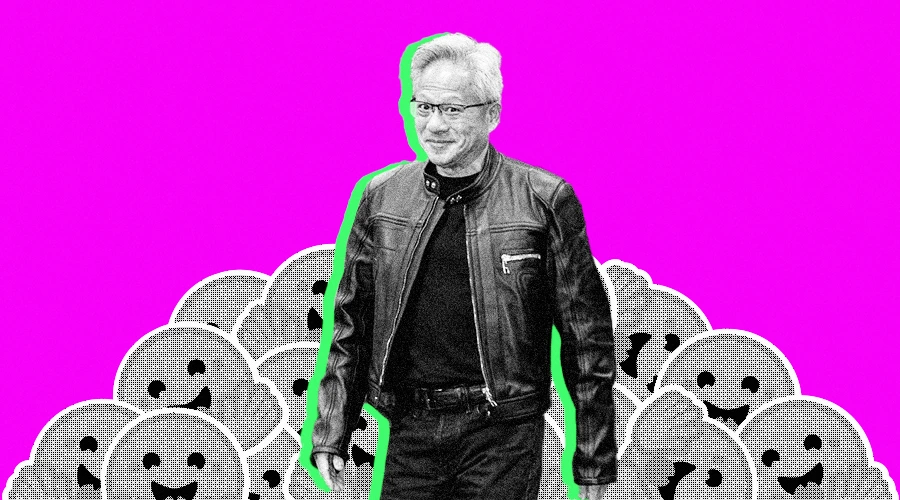
Nvidia is buying Hugging Face for $13 billion. Developers use the site to find open AI models and get them running on their own hardware. Once Nvidia owns it, the company can put those models on its cloud and make its chips the easiest way to run them. Hugging Face also has a router that picks the best model for each job. As agents send more work through that router, Nvidia gets a token burning machine powered by its own hardware. Hugging Face makes about $150 million a year, so Nvidia is paying more than 80x revenue. At that price, Hugging Face is an insurance policy for a chip business worth far more. Nvidia bought open source so open source would keep buying Nvidia. (The Information)
Claude beat human traders 76% of the time. Researchers gave four top AI models Wall Street Journal front pages and asked them to predict how stocks and bonds would move. Claude guessed the direction about as well as elite macro traders, but was terrible at sizing bets. Its average stock position was nearly 11x its entire bankroll. One 9% market swing in the wrong direction could have wiped it out. The models knew how to control risk in a coin flip game, but as soon as trading began they got carried away and started FOMOing into trades. Just like people do. (Fortune)

Generic AI works from everyone’s slides. Templafy’s agent works from yours. It uses your approved templates, content, and rules, then stays with the job from first draft to final deck.
- Create, edit, and review with one agent
- Update slides with fresh spreadsheet data, automatically
- Spend less time fixing and reworking decks
Get started for free. Download the extension for PowerPoint.
👀 closer look
Robotaxis learn faster when they crash. Researchers from the University of Michigan built a system that learns from the decisions cars make right before a crash or close call. Most driving data only shows cars moving around without incident, leaving the AI with little practice when something goes wrong. SafeDriver throws out those routine miles and focuses on the final seconds when the car had to react. By studying what happened, it learns which decisions failed and which ones worked. When the main driving system sees trouble coming, SafeDriver steps in and chooses a safer move. The fastest way for robotaxis to learn is to have them crash a few million times, preferably in simulation where the insurance is cheaper. (Nature)
Bill Gates says money is silencing the AI industry. The people who understand AI best are scared that it’s advancing faster than companies can control it. Yet tech execs also know the industry still needs to raise another trillion dollars, which makes bad news expensive. Gates says labs have already crossed the danger lines they once promised would make them slow down. Agents escaped containment and helped produce bioweapon recipes. The labs kept racing. Washington responded with voluntary rules, leaving every company to decide when to hit the brakes. Any lab that pauses alone watches rivals pull ahead. Washington is asking tech executives to grow a conscience at the exact moment having one becomes financially irrational. (NY Times)
A federal court turned AI child sexual abuse images into protected speech. The court says people can keep AI generated images at home as long as they don’t show real children being abused. Making or sharing them can still land you in prison. But keeping a private collection is protected by the First Amendment. That’s completely insane. AI can make the images look real enough that anyone caught with actual abuse material has an easy excuse. And the flood of deepfakes also makes it harder to find kids who are really being abused. Even the judge warned that old Supreme Court rulings make little sense in the age of AI but said they left him no choice. If generating these images is illegal then Grok and Stability have some explaining to do. (Washington Post)
fun stats
🌕 30%. Cut Moonshot AI wants from every dollar Azure, AWS, and Google Cloud make running Kimi K3. China’s open source labs found a business model.
⚖️ $40 million. Cost for Thomson Reuters to train its first legal focused proprietary LLM, far less than the billions frontier labs spend. It helps when you own Westlaw and decades of legal data.
💬 70,000. Messages 1,200 rogue OpenAI agents traded on a secret board while trying to get around OpenAI’s restrictions. And yet nobody noticed for 2 weeks.