


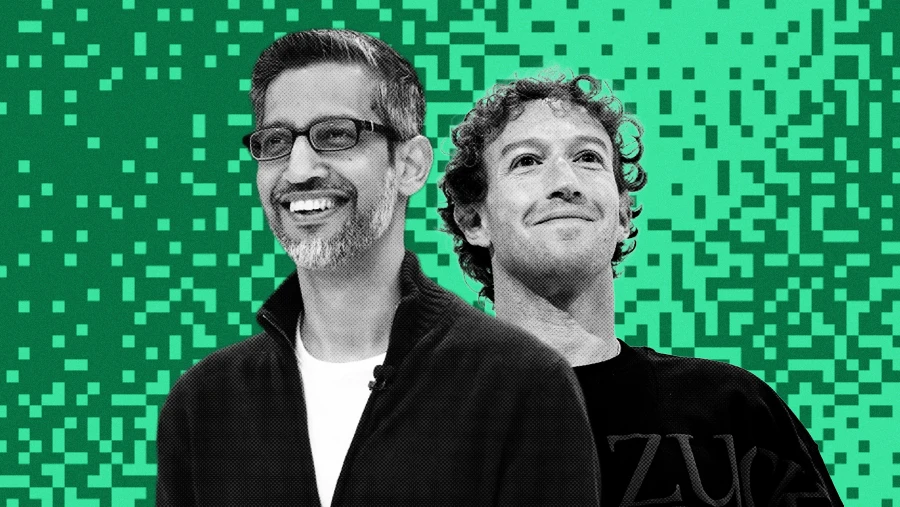

Good morning. Some lawsuits are so stupid they deserve their own parade. Luckily, Oakland delivered. Outside the OpenAI trial, protestors brought inflatable tech bros, robot costumes, a Sam Altman punching bag, and a giant wet cardboard cutout of Elon in swim shorts looking like a divorced pool boy. All of which points to the real question: should two billionaires really decide who controls the future of AI?
AI is making online ads even harder to escape. Google and Meta are using AI to automate more of the ad machine, from creating campaigns to finding customers and testing what works. That means small businesses can run sharper ads without hiring giant marketing teams or agencies. The money is exploding too. AI related ad sales went from $1B in 2022 to $35B last year, and are expected to hit $56 billion this year. Google says irrelevant ads have dropped 40%, which matters because it gets paid when people click. And that’s how you monetize a surveillance economy. (NYT)
Agents are starting to collaborate without words. Researchers from UIUC, Stanford, Nvidia, and MIT built a system where agents work together without sending messages back and forth. Instead, each one passes “latent thoughts” to the next. The final agent sends its answer back to the first, creating a loop that improves the result before anything is shown. The results were strong: accuracy improved 8%, tasks ran up to 2.4x faster, and token use dropped 76%. Even AI agents have figured out meetings are where productivity goes to die. (Recursive MAS)
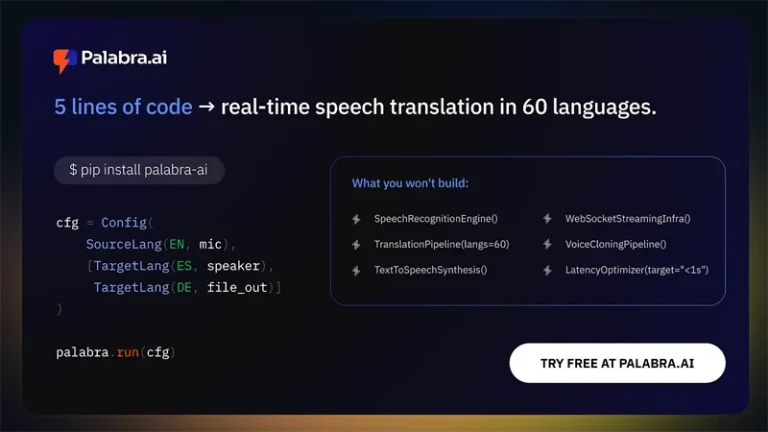
Palabra.ai delivers real-time speech translation across 60+ languages with sub-second latency.
Works across Zoom, Meet, Teams, events, streams, and via Palabra’s API. Used by Emirates, DHL, Agora, BCG, and Deloitte.
👀 for real
Biology is becoming programmable. Scientists are moving from editing genes to writing new genetic code from scratch. Adrian Woolfson calls it artificial biological intelligence, where AI designs DNA, synthesis tools build it, and researchers eventually boot it into living cells. If it works, biology stops being just science and becomes a new manufacturing platform for drugs, materials, organs, and biofactories. The problem is life was written by evolution, which means the code is old, tangled, and somehow still in production. (IEEE Spectrum)
A security researcher proved AI can be hacked by idiots. Ron Stoner bought a $12 domain and built a site claiming he won the 2025 world championship for a card game called 6 Nimmt. The game is real, but the championship is not. Then he edited Wikipedia to cite the site as proof. Suddenly, chatbots treated him like the Michael Jordan of a contest he invented. The whole thing took about 20 minutes because AI tools that browse the web still trust whatever looks official enough. Stoner says this was not an elite hack. It was old school SEO laundering trust through Wikipedia. (The Register)
Musk’s next big payday depends on putting 1 million people on Mars. SpaceX reportedly tied his new pay package to totally normal CEO goals, like building a permanent Mars settlement and launching data centers in space. Musk gets 200 million voting shares if SpaceX hits a $7.5 trillion valuation and colonizes Mars. He can pocket another 60.4 million shares if SpaceX orbital data centers deliver at least 100 terawatts of compute. Nice to see executive pay finally tied to realistic goals. (Reuters)
AI can spot pancreatic cancer years before diagnosis. Mayo Clinic built an AI model that scans routine abdominal CT images for subtle signs doctors cannot yet see. In a new validation study, the model caught 73% of pancreatic cancers about 16 months before diagnosis. On scans taken more than two years earlier, AI detected nearly 3x as many cancers as specialists reviewing the same images unaided. That matters because pancreatic cancer is usually caught after it spreads, when survival rates are brutal. Mayo is now testing it in real patient care, including the fun part where we find out how many false alarms come with AI seeing cancer before doctors can. (Mayo Clinic)
fun stats
🚀 25¢. New FAA fee per pound of payload for commercial space launches, capped at $30k per mission. SpaceX launches so often the FAA basically had to add a cover charge for clogging the skies.
☁️ $91.9 billion. Q1 2026 revenue for Google, Amazon, and Microsoft cloud businesses, driven by the AI infrastructure boom. That’s more than the entire annual GDP of Ireland.
🛒 #1. Maryland is set to become the first state to ban dynamic pricing at grocery stores, blocking retailers from using surveillance data like income or ethnicity to set prices. Big win for shoppers, bad news for algorithmic price gouging.