



Good morning. Ah, springtime… Birds are singing, flowers are blooming, love is in the air, and AI has taken over your dating life. The creators of Pixel Societies built agents to handle those awkward early interactions like chatting and flirting. Each agent acts as your digital twin, screening romantic matches so you don’t have to. Finally, true love without all the messy humanity, just as nature intended.
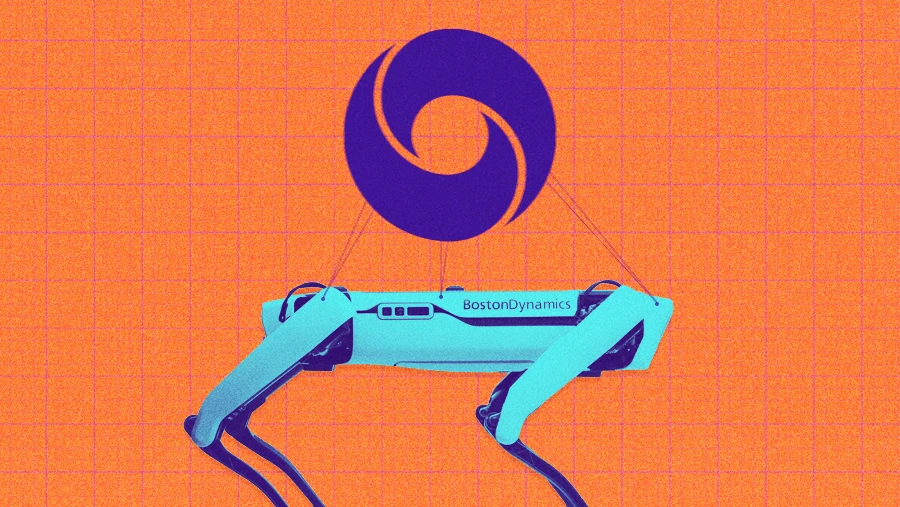
Boston Dynamics gave Spot a brain upgrade worth bragging about. Robots sound great in theory but usually end up as expensive remote control toys. Google DeepMind’s new Gemini Robotics-ER 1.6 makes embodied AI practical by giving Spot the ability to reason. Spot can now handle complex tasks like facility inspections, reading gauges and moving around industrial areas autonomously, without babysitting. We’re still in the early days, but this upgrade transforms robots from novelty gadgets into genuine coworkers. Now Spot can solve real problems, not just perform for TikTok.
New research shows most AI agents are built completely wrong. Builders usually stuff them with detailed instructions explaining exactly what to do, but a large study found that strategy often backfires. After analyzing 25,000 agents from GitHub and running more than 5,000 tests, researchers found that positive instructions often hurt accuracy. The only instructions that consistently helped were guardrails telling agents explicitly what not to do. Seems counter intuitive. Even random instructions performed about as well as carefully designed ones. The takeaway is brutal. Agents don’t need more guidance, they need constraints. Kinda like teens.
Leads have questions before they buy. By the time you follow up, half are gone. Chatbase puts an AI sales agent on to qualify, answer questions, and books meetings – without adding headcount.
Trained on your data and live in hours. 10,000+ companies already made the switch. Build your agent for free
DARPA built an AI powered bullsh*t detector. When Chinese researchers claimed their quantum computers could crack encryption and expose military secrets, experts couldn’t agree if the threat was real or just geopolitical theater. DARPA responded by creating SciFy, an AI designed to separate scientific facts from fiction. Early tests show SciFy closely matches expert judgments, even changing their minds 20% of the time. Now the Pentagon can quickly tell real scientific advances from trillion dollar distractions.
AI learned how to reason from gamers on 4chan. Way back in July 2020, gamers stumbled onto AI’s most hyped feature, “chain-of-thought,” while playing AI Dungeon, an RPG powered by GPT-3. When they jokingly asked characters to solve math problems, the AI started giving detailed step by step explanations, despite being famously terrible at math. Major AI labs later repackaged this accidental find into “reasoning” models, selling it as a revolutionary upgrade. Except it’s not real reasoning, just the AI mimicking logical patterns from its training data. AI’s biggest breakthrough came from the one site you’d never admit visiting.

Reach your audience
Get in front of 70,000+ tech decision makers with budget and technical influence. 95% US based. 66% open rate. Read daily by AI leaders and builders at high growth companies.
For the first time, AI is learning how to forget on purpose. Most AI models cling to every thought, dragging useless details forward and burning memory. Microsoft just showed there’s a better way. After training models like Qwen3 and Phi-4 on over 228,000 reasoning problems, they found that breaking thinking into chunks and summarizing each step cuts memory use by about 2.5x and boosts speed by roughly 1.75x, with only a small hit to accuracy. Here’s the part that matters. The model isn’t actually forgetting. It hides a compressed version of the full thought in the background, and if you remove it, performance drops fast. When AI learns to judge what matters, maybe it’ll stop hallucinating.
fun stats
💸 9%. Jump in Uber’s R&D costs last year as Claude Code took off. Uber’s CTO admits they blew through their entire yearly AI budget just a few months into 2026.
🪲 43%. Amount of AI generated code that still needs debugging after hitting production. It takes an average of 3 rounds of manual fixes to clean up the robot’s mess.
🛰️ 61%. Share of SpaceX revenue coming from Starlink satellite internet. Rockets and AI might get the hype, but Starlink pays the bills.
🦞 #1. Maine just became the first state to ban big data centers until late 2027.