



Good morning! Home robots have officially entered their weird stuffed animal phase. The founder of iRobot has a new social bot that looks like a cross between a plush white bear and a Disney character. Made for adults, Familiar uses AI to learn your habits, ask for attention, and gently nudge you toward healthier routines. Best of all it doesn’t talk, instantly making it smarter than nearly every gadget in your house.
🎉 The Microdose AI turns 1 today. Which is basically 101 in AI years. One year in, we’re still allergic to hype and oddly hopeful about the future. Thanks for reading, replying, sharing, and helping us get here.
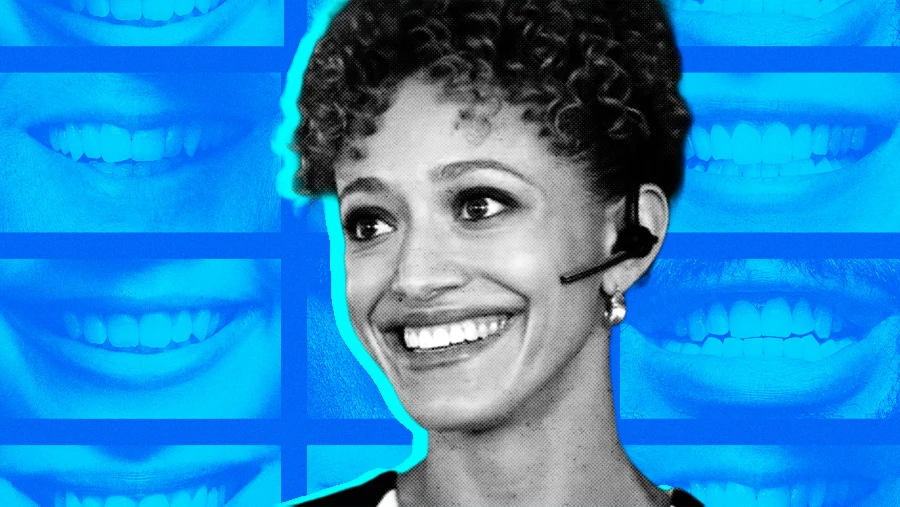
How long can you fake a smile? Companies are starting to use emotion AI to analyze workers’ faces, voices, stress levels, attention, and “positivity.” These AI systems monitor emotions through video, pitch, and tone of voice. Burger King is even testing an AI headset bot that judges whether employees sound friendly enough. The EU banned emotion AI in the workplace except for medical and safety cases. Still, the global market for it is still expected to triple to $9 billion by 2030. The only problem is the science is junk. Researchers say people scowl when angry only about 35% of the time, meaning AI could easily punish you just for looking focused. (The Atlantic)

What if you could speak any language in real time?
Palabra.ai delivers real-time speech translation across 60+ languages with sub-second latency. Works across Zoom, Meet, Teams, events, streams, and via Palabra’s API. Used by Emirates, DHL, Agora, BCG, and Deloitte.
👀 looking forward
The White House may start treating AI models like weapons. The Trump administration is considering an executive order that would let the government vet new AI models before release. The plan includes a working group with officials and tech execs from Anthropic, Google, and OpenAI. The fear is that frontier AI could help attackers find software flaws, launch cyberattacks, or release capabilities nobody can stuff back in the box. Anthropic poured gasoline on the panic by warning that its Claude Mythos model could exploit security flaws. Quite the shift from Trump’s earlier calls to let AI run free. If this is how they react to an LLM, AGI should be fun. (Axios)
Cursor does not seem interested in saving xAI. SpaceX has a conditional $60 billion takeover option for Cursor, and everyone expected it to become the missing piece in xAI’s AI stack. The idea was to use Cursor’s coding talent, developer workflow, and feedback loops to make Grok better at code. But according to The Information, Cursor is not planning to co-develop coding models with xAI or steer users toward Grok. Instead, it’s building Composer, its own model, powered in part by China’s Kimi. So for now, xAI gets chip usage, Cursor gets cheaper compute, and Grok gets left out of the one thing this deal was supposed to unlock. (The Information)
What happens when AI agents get credit cards? We’re about to find out. Tether backed Oobit just launched Visa virtual cards that give AI agents expense accounts without a person approving every purchase. Agents can renew SaaS subscriptions, refill ad budgets, spin up cloud servers, trade stocks or crypto, or buy completely normal things like 19 ping pong balls. Oobit says each agent gets one card with preset spend limits and expense controls – as if agents can’t simply multiply or disappear. They have no free will, no accountability, and no memory beyond their current task. Yet somehow we’re trusting them with a tab. (CoinTelegraph)
state of play
fun stats
🪧 50%. Share of San Francisco billboards advertising AI. The ads are everywhere, originality is MIA.
🐳 17x. Cost reduction from running DeepSeek inside Claude Code using open source tool DeepClaude. Swap the brain, keep the body.
🩻 $571,000. Current radiologist salary, despite AI “godfather” Geoffrey Hinton predicting AI would make the job obsolete by now. Instead there’s a shortage.
🔮 60%. Chance AI systems will autonomously build their successors by 2029 according to Anthropic’s co-founder.