




Good morning. The World Cup has always been a little detached from reality. Grown adults wear face paint. Nations develop temporary gambling problems. A man kicking a ball can become a diplomatic incident. Now AI has joined the party, turning Erling Haaland into internet folklore in real time. Fans are making deepfakes of the Norwegian player, sharing debunked clips, and deciding the made up version feels spiritually accurate.
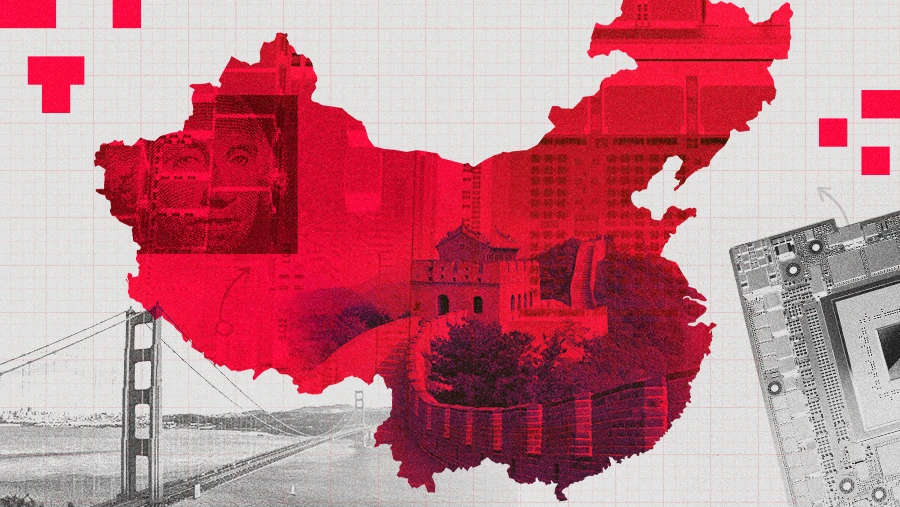
Beijing is building a Great Wall around Chinese AI. China’s AI labs gained ground by giving their models away, letting anyone download them for free. That helped the models spread while American labs kept their best systems behind paywalls. Then the models got better. Now Beijing is considering cutting off foreign access to its most powerful AI, including future releases that may never go public. Once a model lands on Hugging Face, it’s too late to pull it back. Z.ai’s GLM 5.2 raised the stakes after claiming it could match Anthropic’s Mythos at finding software bugs. That puts Beijing in a brutal position: keep the models open and lose control, or close them and lose the strategy that helped Chinese AI spread. (Gizmodo)
AI is learning faster than our ability to measure it. Washington has until Aug 1 to create a benchmark for measuring how dangerous frontier models could be in a cyberattack. But how do you test advanced AI that can find zero-day vulnerabilities in classified government systems within hours? Public tests are becoming useless because they were built around staged hacking challenges. Stanford warns that static AI tests meant to stay difficult for years are getting beaten in months. One red-teaming AI lab said its agents cleared every public cyber benchmark within four weeks. Now the race is on to build a better test before the models make that one obsolete too. Whoever writes the benchmark gets to help decide what “safe” means. (Reuters, Axios)

Stop hallucinations. Power your agents & chatbots with real-time data from the Brave Search API:
- Specialized endpoints built for LLMs
- 40B page index, no Google scraping
- $5 per 1,000 calls, plus free monthly credits
- RAG pipelines, Claude MCP, OpenClaw, Hermes, and more
👀 closer look
A startup just put a longevity lab in space. The grapefruit sized pod launched on a SpaceX mission and will spend the next couple of months orbiting Earth while running chemical experiments autonomously. Mass Balance wants to study proteins tied to Alzheimer’s and other age related diseases. On Earth, these proteins constantly change shape, making them hard to study and leaving holes in AI biology models. This first mission is testing whether the tiny orbital lab can run a reaction, capture clean data, and beam it home. If it works, Mass Balance wants to turn microgravity into a data source Earth labs cannot easily copy. We have reached the part of longevity research where $10,000 per pound for a lab sounds like a reasonable bet. (WIRED)
Ukraine wants an AI no one else can switch off. One thing a war torn country knows better than most is the cost of dependence. Ukraine is looking at AI models that can run on its own servers, so critical systems are not tied to providers that can cut access from abroad. The risk became harder to ignore after the US ordered Anthropic to block access. Ukraine’s current government AI assistant runs on Google’s Gemini, but officials strip out personal data because they don’t control the model. Now Ukraine is developing its own AI based on open models after tests showed some matched closed systems. Where the model comes from matters less than whether Ukraine can keep it running when someone else changes the rules. (Reuters)
Big Tech is dropping its net zero climate goals. Google and Amazon just released their yearly sustainability reports, and the climate math is getting ugly. Google’s emissions climbed 25% year over year, while Amazon’s jumped 16%. Meta’s emissions shot up 64% last year. AI data centers need huge amounts of power, and all three are turning to fossil fuels. Now Google is talking about “climate moonshots” instead of concrete 2030 targets. Energy is the new moat, and whoever has the best power deal could win the AI race. (The Guardian)
latest drops
OpenAI GPT 5.6 gets the greenlight. Washington has lifted restrictions on GPT 5.6, clearing OpenAI to publicly release its Sol, Terra, and Luna models on Thursday. Perfectly timed, as Anthropic’s free Claude Fable 5 trial ends July 12.
Meta releases Muse Image, its new AI image generator made for creators and advertisers looking to remix ad creative. And because Meta can use public Instagram photos unless users opt out, don’t be shocked when your friends start showing up in targeted ads.
SpaceXAI and Cursor launch their first joint AI model. They claim it’s as good as GPT 5.5 and Opus 4.8 at coding. Believe it when devs on Hacker News stop calling it benchmark theater and start using it in real repos.
fun stats
❌ 8,000. People Discord mistakenly banned because its AI moderation system decided images of chessboards and Minecraft were somehow NSFW.
👽 100%. Times AI mislabeled new specimens as alien life forms in a recent MSU study. False positives are spreading everywhere AI “sees” a pattern, from facial recognition to medical scans.
⚽ 3–2. Fake Norway win over Brazil sent by Coinbase’s AI notification system before the World Cup match had even started. The crypto exchange now lets users authorize AI agents to execute financial transactions. Let’s hope those are more accurate.