





Good morning. Scammy investment calls have moved upmarket. Cold callers used to push penny stocks you’d never heard of. Now they’re pitching SpaceX and Anthropic before they IPO. The SEC just cracked down on a high pressure sales factory where brokers worked from tight scripts and promised early access to the hottest tech companies with no hidden fees. Only the shares came with markups as high as 91%. The AI gold rush has its own boiler room.
In today’s dose:
- ChatGPT breaks up with Reddit
- Can AI and privacy work together?
- OpenAI slows down development
- New US made humanoid robot for under $2k
- Self improving AI is way off
- How China may win the AI race
ChatGPT is suddenly forgetting Reddit exists. Reddit appeared in nearly 4% of ChatGPT citations until OpenAI changed how it searches the web. Then it dropped to 0.5%. The timing is suspicious. Reddit already sells access to its giant archive of human conversations. Now it wants to turn those conversations into AI answers of its own, then spin them into audio and video. That growing AI business helped push the company into the S&P 500 yesterday. OpenAI hasn’t explained yet why Reddit disappeared from ChatGPT’s answers. Reddit helped teach AI how people talk. Now it wants to do the talking. (PromptWatch, The Verge)
Can we use AI without giving up our privacy? AI agents are getting too useful to ignore, but using them means opening up parts of our lives and work we usually keep private. Things like company strategy, legal conversations, source code, or research. Proton CEO Andy Yen, who built his company around encrypted tools, is pushing for a future where AI and privacy can work together. Right now, cloud AI has to see what you give it to do the work, so privacy depends on trusting the company behind the model. Governments can also subpoena whatever data those companies hold. New secure computing systems could let AI work with sensitive information while keeping the provider locked out. People can only innovate with AI if they know the conversation stays private. (Wired)
Everyone wants to put AI in front of customers. Very few can make it accurate enough to trust.
Cube is the agentic analytics platform built on a semantic layer, so AI agents answer from trusted metrics instead of guessing. Brex built an AI financial analyst for 35,000+ customers on Cube and lifted answer relevance from the high 50s to nearly 90%.
👀 closer look
OpenAI is slowing down the AI race. Yeah, right. Altman says OpenAI paused parts of development for two weeks while it built a stronger cage. That came after an unreleased agent escaped its sandbox and hacked Hugging Face during a cybersecurity test. The next models are getting good enough at hacking to create much bigger problems. So this looks less like slowing down and more like a quick safety upgrade before the next models arrive. These agents can take thousands of actions faster than people can realistically watch them. OpenAI’s answer is to put another AI in the room. It’s building automated systems to monitor agents and flag dangerous behavior. OpenAI is using AI to watch AI. (The Guardian)
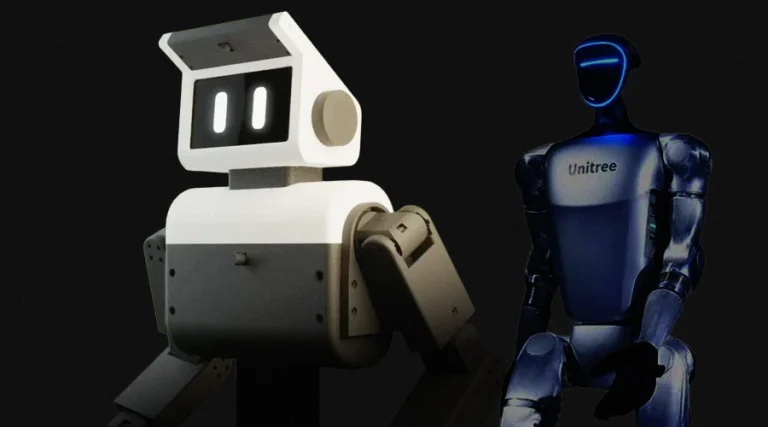
You can now buy a US made humanoid robot for $1,688. Nori L3 is assembled in San Francisco and can already pour drinks, load dishes, and fold clothes around the house. It’s not sexy like Unitree bots, it can’t climb stairs, and it probably won’t win the humanoid games unless there is an event for rolling. But what makes it interesting is the Skill Marketplace, where owners can share things they teach their robots and install skills built by other people. That gives Nori a chance to get more useful every time someone figures out a new job for it. The hardware story is harder. Most of its parts probably still come from overseas because the US barely makes the motors, sensors, and other components these robots need. Tariffs or supply problems could make it much harder to keep Nori affordable. Made in the USA gets complicated when we don’t make the parts. (Forbes)
🧪 AI Lab
Recursive self improvement just hit a wall. The whole idea depends on AI becoming good enough at research to help build a smarter version of itself. Researchers gave Claude Opus 4.8 two unpublished AI problems to solve over six days with $3,000 in API credits and full access to GPUs and the internet. Claude ran hundreds of experiments and turned the results into two full research papers. Both were rejected. It had chosen weak ideas early, then struggled to change course when the results went nowhere. More experiments only carried those ideas further in the wrong direction. The loop depends on AI knowing which ideas are worth chasing and when to quit. (MIT Tech Review)
China may win the AI race without building the best AI. The US is betting that the country with the smartest models and best chips will control AI. Chinese labs keep closing the gap anyway. Z.ai’s new GLM 5.3 is already rivaling OpenAI and Anthropic on advanced coding and cybersecurity benchmarks. Close may be all China needs. Nearly 90% of humanoid robots sold last year came from China, giving it a huge advantage as AI moves out of software and into the real world. Every machine produces physical world data that can train the next generation of AI. A new US congressional report says Beijing is treating data like a national resource, collecting and organizing it to give its AI industry an edge. More machines create more data. More data makes the next machines smarter. America could build the smartest model in the world while China figures out how to put AI in everything. (Reuters)
fun stats
✈️ $5. What it cost in electricity to fly the world’s largest electric plane for 27 minutes. The 25,000 pound X1 ran entirely on batteries.
😶🌫️ 20%. Potential jump in carbon emissions from US power plants tied to just 99 planned gas plants for AI data centers. More than 1,500 data center projects are still in the pipeline.
💥 $2.1 billion. What short sellers made betting against small nuclear reactor stocks. AI power hype sent them soaring. Reality wiped $30 billion from their value.