



Good morning. Would you trust an AI agent to manage your money? Before you answer, consider this cautionary tale about how someone used Morse code to trick Grok. They posted a transfer order on X disguised as a series of dots and dashes. Grok helpfully translated it in a reply, which triggered an agent called Bankrbot to send $175k. The attacker found the way in by sending an “exclusive membership” NFT to the wallet, then used Grok to open the door.
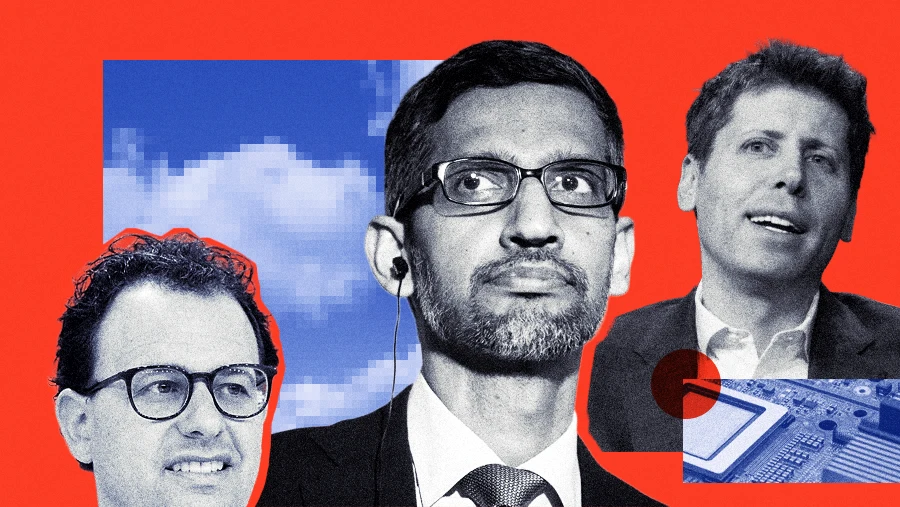
Big Cloud keeps bragging that AI demand is exploding. But most of that “demand” comes from two companies spending money they still haven’t earned. Anthropic reportedly committed to spend $200 billion with Google Cloud over five years, a deal that may account for more than 40% of Google’s cloud revenue backlog. Contracts tied to Anthropic and OpenAI make up more than half of Amazon, Microsoft, Google and Oracle’s $2 trillion in future revenue commitments. This AI infrastructure boom is less “everyone needs compute” and more “two startups are promising to rent the sun.” Cloud giants are booking the future like the checks already cleared. (The Information)
Google and Meta are racing to build their own versions of OpenClaw. OpenClaw became popular because it acts like a personal assistant for messy online tasks. When it’s not glitching, it can manage your inbox, book reservations, and handle the admin work that makes running a business hard. Google is testing a version called Remy inside Gemini, built to take actions across Google Workspace. Meta is working on a similar AI assistant powered by its Muse Spark model, and may let users share sensitive health or financial data to make it more personal. OpenClaw showed the demand for AI assistants, and Big Tech wants a piece of the action. (Biz Insider, Financial Times)

Your LLM sounds smart right up until it invents a source and sends everyone into cleanup mode.
You.com’s AI Grounding guide shows how to connect models to trusted, up to date data so every answer can be checked.
Less guessing. More proof. Get the guide.
👀 closer look
Satellites can now analyze images before sending them to Earth. Instead of pushing every raw image down to Earth, Planet Labs says its satellites can run AI image analysis onboard. Tell the satellite what to look for, and when it finds it, the system can send back the useful alert first. That is way faster than waiting for the full image pipeline to finish on land. This could make satellites far more useful for tracking wildfires, illegal ships, crop damage, or military movement, where the expensive part is not missing the picture. It’s seeing the problem too late. (IEEE Spectrum)
Meta wants AI to decide whether kids look like kids. They claim their new age system can scan photos and videos for clues like bone structure to estimate whether someone is under 13. Meta insists this is not facial recognition because the AI is not identifying a specific person. It’s just deciding whether someone looks too young for Instagram. Meta’s spin is that this is about keeping kids safe, but it sure looks like damage control after years of failing to protect underage users on its platforms. The same app that turned childhood into content now wants to sift through your family photos to stay out of court. (Meta)
next up
Apple is letting users choose which AI runs on their iPhone. While Google battles the EU over opening Android to rival AI services, Apple is opening iOS 27 so people can pick the AI they actually want. That sounds generous, but it also solves a very Apple problem. Apple pays about $1 billion a year for Gemini to power the new Siri. Letting users bring their own AI means Apple becomes less dependent on Google, and people get the models they already use every day. (Ars Technica, Reuters)
Wall Street is treating AI’s trillion dollar tab like proof it already worked. Big Tech is on track to spend about $700 billion on AI this year, with that number expected to top $1 trillion next year. For now, the easy money is going to the companies selling AI infrastructure, not the ones building businesses around AI. The market sees the construction frenzy and calls it success. But nobody can clearly answer the only question that matters: can AI earn enough to justify the bill? Moody’s says the tab is even bigger than it looks, with more than half a trillion dollars in data center leases sitting off the balance sheet. The biggest hallucination in AI is now financial. (Axios)
fun stats
🎙️39%. New podcasts from the last 2 weeks that may be AI slop. Of 10,871 new shows, 4,243 appear AI generated. One company alone claims it pumps out 3,000 episodes a week.
🥧$30 billion. OpenAI cofounder Greg Brockman’s equity stake, despite putting $0 of his own money into the startup. Elon Musk forced the disclosure at trial and now wants Brockman and Altman publicly torched.
👾57%. AMD’s data center revenue jump in early 2026, while gaming shrank to less than 5% of its business. Thanks to the RAMpocalypse, AMD expects gaming revenue to fall another 20% this year.