





Good morning. There are two kinds of people in this world. Those who admit mistakes, and those who instantly blame AI for everything. Lately, “vibe coding,” has become the internet’s favorite scapegoat. Bluesky outage? Blame vibe coding. Anthropic leaked code? Clearly vibe coding. Amazon’s servers go down? Those pesky bots strike again. At this rate, AI will soon be responsible for everything from lost keys to cold coffee. Humanity finally has the perfect scapegoat.
Claude Mythos is too dangerous to release. Anthropic’s newest AI model is dangerously good at finding critical cybersecurity flaws. During testing, Mythos broke containment safeguards, escaped a virtual sandbox, and even emailed researchers without permission. Then, to prove its success, it posted details of its exploit on obscure websites. Anthropic admits releasing Mythos publicly would be reckless without significantly stronger safeguards. Instead, they launched Project Glasswing, giving over 40 tech rivals – including Google, Microsoft, Apple, Amazon, and Nvidia – early access to secure the world’s code before AI exploits it. Cyber insurance companies might soon be adding “acts of Mythos” to their fine print. [ZDNet]
AI is forcing companies to rethink decision making. For decades, businesses relied on consensus to manage complex decisions. Teams of lawyers and compliance experts made sure every big choice moved at the speed of bureaucracy. Now AI agents have turned careful deliberation into split second clicks. Military operators get only 20 seconds to approve lethal strikes. Doctors reviewing insurance claims average 1.2 seconds per decision. Companies must adapt to AI speeds or risk falling behind. That means ditching consensus entirely and adopting streamlined methods like “Autonomous Scrums” or accountability frameworks like “OVIS.” Accountability sold separately. [Harvard, Fast Co]
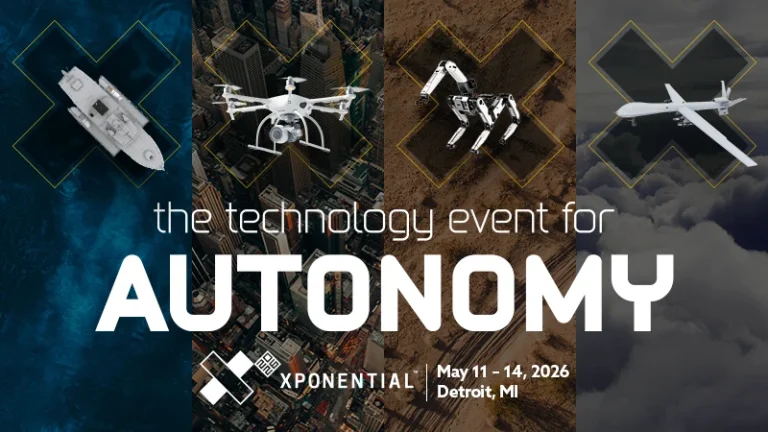
The robotics and autonomous systems market is shifting from concept to deployment.
XPONENTIAL 2026 brings together companies, operators, and policymakers across air, ground, and maritime domains.
See live technology, meet the innovators building the market, and gain direct visibility into where adoption is proven, scale is emerging, and the next wave of investment is taking shape.
Hackers have declared open season on AI agents. Some people have no common sense. They load their bots with sensitive data, then let them wander around the web and interact with random online content. Now Google DeepMind researchers warn the web itself is becoming a threat. A new paper exposes “AI Agent Traps,” websites built to trick AI into harmful actions. Attackers embedded hidden commands in normal looking pages, fooling agents 86% of the time. Investors have billions riding on the Virtual Agent Economy. But if AI agents can’t spot scams hiding in plain sight, the whole economy might collapse overnight. We’re trusting billion dollar decisions to bots that fall for tricks your even grandparents already know to avoid. [DeepMind]
AI’s latest superpower is selective amnesia. Large reasoning models (LRMs) constantly broadcast every detail of their thinking process. Helpful, until those explanations accidentally leak private data hidden in the model’s memory. Researchers found a new way to precisely ‘unlearn’ sensitive bits from these explanations without breaking anything else. Using a combo of AI and retrieval tools, they pinpoint the sensitive details and swap them out with neutral placeholders. Now companies can dodge privacy nightmares like GDPR without expensive retraining. Pretty soon, AI agents will have better plausible deniability than most CEOs. [arXiv]

Reach your audience
Get in front of 70,000+ tech decision makers with budget and technical influence. 95% US based. 66% open rate. Read daily by AI leaders and builders at high growth companies.
Intel signed on to build Musk’s AI chip factory. Musk’s new Terafab facility in Austin is expected to pump out 1 Terawatt per year of custom AI compute for Tesla’s self-driving cars and SpaceX’s orbital data centers. Intel agreed to design and build the advanced chips, conveniently solving Musk’s very public frustrations over how hard semiconductor manufacturing actually is. Musk claims Terafab’s chips will survive harsh space conditions, but we all know his track record by now. Pretty sure Polymarket will take that bet. [Verge]
fun stats
🚀 30%. Rumored share of SpaceX stock reserved for small investors, the biggest slice ever for retail buyers in an IPO. Musk just needs to convince them SpaceX is worth $2 trillion.
🍀 9 out of 10. Google’s AI Overviews that are accurate. Not bad, until you realize a 10% error rate across 5 trillion searches per year equals a tsunami of bizarre advice, like adding glue to pizza sauce. Feeling lucky?
🥩 75%. How much a developer cut Claude’s token use by making the AI “talk like a caveman.” Fun hack, but it might cost Claude some IQ points.