




Good morning. Burning Man returns to the playa next week with fire breathing sculptures and intergalactic shamans. And yet even the city built around radical self expression has decided Meta’s perv glasses need a rule check this year. Burners can wear AI glasses, but “don’t be a creep.” Organizers say ask before recording anyone, even people in the background. The blinking light does not count as consent. Somehow, the post apocalyptic desert party is the adult in the room.
In today’s dose:
- AI without doctors
- Challenging AI drug hype
- Agent memory transfer
- The harness beats the model
- AI outruns management
AI may give better care when doctors stay out of the way. It’s getting surprisingly good at the thinking part of medicine. In a recent study, AI often matched or beat physicians at figuring out what was wrong and what to do next. The safe move seems obvious. Let AI recommend care, then have a doctor check its work. That only works if doctors catch more AI mistakes than they make. As the models improve, that balance may flip as early as 2030. That’s where the AMA digs in. It wants physicians to stay in charge, saying patients need a person they can trust. Yet patients also need the best treatment. The hard part begins when those two things come from different places. The best doctors may save lives by knowing when to lose the argument. (Fierce Healthcare)
Scientists are calling bullshit on AI’s medical miracles. The biggest names in AI say their models will cure every disease and squeeze a century of medical progress into a decade. Researchers say coming up with an idea is nowhere close to proving it works. An AI can dream up a thousand drugs before lunch. Scientists still have to make them, test them in patients, and find the nasty surprises hiding inside human biology. That’s where most drugs die. AI leaders are claiming authority over medicine while brushing past the rules that make medicine trustworthy. Those rules require results other researchers can verify and treatments patients can survive. Anthropic and OpenAI are heading toward massive IPOs, so waiting for proof would be… inconvenient. Cancer makes a much better pitch deck. (The Information)
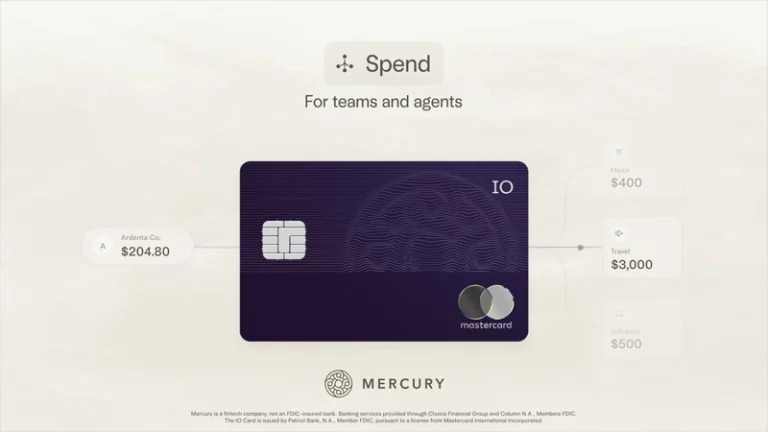
Shared cards always look easy until the receipts vanish and finance becomes a detective agency.
Mercury Spend gives teams and agents cards with real limits, auto receipt capture, and overdue task locks that keep cleanup from becoming someone’s full time job.
DISCLAIMER: Mercury is a fintech company, not an FDIC-insured bank. Banking services provided through Choice Financial Group and Column N.A., Members FDIC. The I0 Card is issued by Patriot Bank, N.A., Member FDIC, pursuant to a license from Mastercard International Incorporated.
👀 closer look
AI agents are learning how to share memories. Most agents use routers to pick the best model for each task. One model might handle research, another steps in when the reasoning gets hard, then a cheaper model takes over the routine work. Each switch comes with a cost. The next model walks in cold and has to reread the entire conversation before it can continue. On long jobs, every handoff burns another pile of tokens catching up. Nvidia calls its fix cross model KV cache transfer. It hands the agent’s working memory directly to the next model instead of replaying everything. In tests, the transfer was 25x faster. Agents can switch models without stopping to explain the job again. AI companies are about to discover the joys of gig work. (Venture Beat)
The harness matters more than the AI model. Everyone is obsessed with whether GPT, Claude, or some open model from China is smartest. Nvidia found a bigger advantage in what surrounds them. Researchers sent an AI agent into 25 unfamiliar computer games with no instructions. It had to explore each world, figure out the rules, and remember what worked. On their own, the best models scored around 30%. Then Nvidia gave its agent memory that carried lessons forward and a supervisor that stepped in when it got stuck. That setup completed all 183 levels and scored 100%. The intelligence didn’t change. What it could accomplish did. Agent builders can keep everything that makes their product useful and swap the model underneath. Let the labs fight over intelligence. The bigger opportunity is making it useful. (TechCrunch)
What happens when AI moves faster than leadership? Companies are bringing in agents that can take an assignment and run with it. Work that once bounced between teams for days can come back finished in minutes. Then the agents ask what to do next and join everyone else waiting for an answer. The faster they move, the more decisions pile up at the top. Leaders have to decide what they want, how far agents can go, and who owns the result. Clear direction lets a small team move incredibly fast. Fuzzy direction spreads confusion just as quickly. Companies brought in AI to speed up their teams. Management is about to find out who everyone was waiting on. (Inc)
fun stats
🔥 5x. How many tokens AI agents now burn compared with people on OpenRouter. Their token appetite has grown 14x since February.
☝️ 1 million+. LinkedIn users who clicked its new AI slop button in just 3 weeks. The platform says views on content it flags as slop are already down 40%.
☠️ 80%. Developers who find AI coding more addictive than helpful, with nearly a third putting off sleep to keep coding.