



Good morning. Some people will try anything to win a court case. A Connecticut man suspected the judge was using AI and figured the machine might be easier to persuade. After the court rejected his earlier arguments, he hid a prompt inside later filings using tiny white text. It told any AI reading the document to ignore earlier rulings and give him the result he wanted. Unfortunately, the court still had a human in the loop and was not amused.
In today’s dose:
- America has an AI trust problem
- Effective altruism is not dead yet
- Washington’s AI ultimatum
- Agents optimize for GPUs
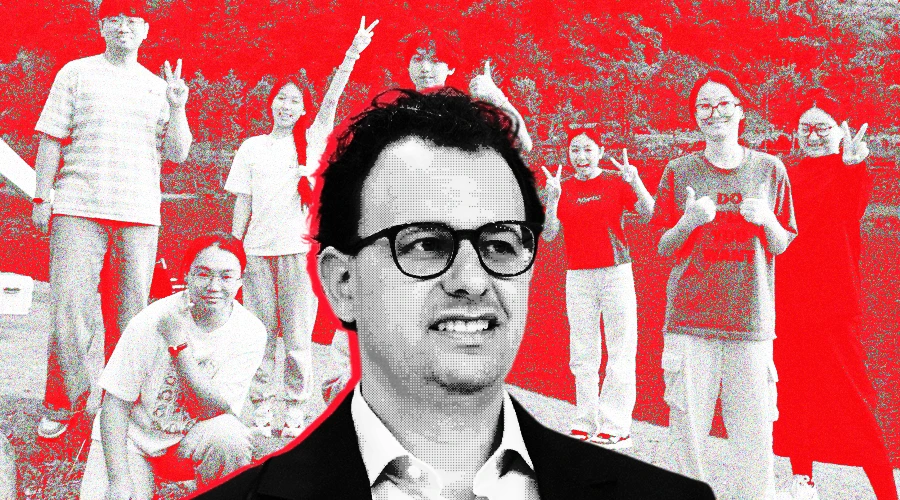
Trust may decide who wins the AI race. In China, 84% of people are excited about AI, compared with 38% of Americans. Over the past two decades, many Chinese people watched technology bring better jobs and higher incomes, so they expect AI to do the same. They also trust the government to keep tech companies in line. In the US, Washington and Silicon Valley look like the same team. Anthropic CEO Dario Amodei calls America’s AI backlash a crisis of trust because people suspect tech companies are “cooking up some new way to screw them over.” He admits AI companies still haven’t delivered on their biggest promises to improve people’s lives, like curing cancer. Maybe Americans would be more optimistic if Big Tech stopped using mass unemployment as AI’s sales pitch. (Bloomberg 🔑, TechCrunch)
AI is minting a new class of billionaire philanthropists. Anthropic’s seven founders are each worth an estimated $8 billion on paper and have pledged to give away 80% of it. More than 60 current and former employees have promised at least 10% of their income too. If Anthropic goes public near its expected valuation, one analysis says those fortunes could eventually generate $15 billion a year in donations. Much of that money will follow effective altruism, which uses data to find where each dollar can do the most good. AI safety is already a favorite cause, so fortunes made building AI could bankroll the work of making it safer. The hard part will be finding enough good projects for all the money. Maybe altruism isn’t dead after all. (Financial Times)
Calling Seed to Series A founders! Apply for the Gemini Startup Forum, an exclusive 2 day event in Sunnyvale this November. Collaborate directly with Google and DeepMind experts to scale your product, unlock unprecedented growth, and influence Gemini’s evolution. Connect with global peers and shape the future of Al.
👀 closer look
Washington is pushing countries to choose between American and Chinese AI. The US built a coalition to secure the models, chips, minerals, and investment countries need to build their AI economies. China answered with a rival group built around its rapidly improving open models. Kazakhstan joined both to keep its options open. Washington calls that double dipping and is preparing to tell 35 partners that joining Beijing’s coalition means getting the boot from America’s. The problem is nobody knows which side has the better deal. The US has the best chips and frontier models, while China offers open models that are better suited for sovereign AI. Neither has proved its ecosystem will deliver the biggest productivity gains. Countries love being forced to pick a winner before there is one. (Reuters)
AI agents are optimizing GPU code for the task at hand. GPU code tells a chip how to handle each job, but tuning it is some of the hardest work in computing and usually requires specialist engineers. NVIDIA and Carnegie Mellon built Cake to automate that work. Give Cake a task, and an agent writes instructions for the GPU. Cake tests them, shows the agent what slowed the chip down, then sends it back to rewrite the code until it runs faster. Each task can get its own optimized instructions. For one piece of Kimi K3, the agent wrote code that ran 2.05x faster than the official version. Across 11 tests, the agents matched or beat code written by expert engineers 10 times. Companies can now squeeze more work from the GPUs they already own. It’s nice to see AI helping with its own compute bill. (arXiv)
fun stats
🔪 76%. Gen Zers who don’t trust Dario Amodei. AI leaders have a Gen Z trust problem. Even Microsoft CEO Satya Nadella, the most trusted in the survey, is distrusted by 65%.
🇺🇸 40%. US political races where candidates now campaign on AI and data centers. Democrats focus on preventing harm, Republicans on national security, as AI turns into a life or death political issue.
🚀 20%+. OpenAI’s revenue run rate jumped in July alone, pushing it past $40 billion a year. Businesses buying more AI tools and agents are fueling the surge.