



Good morning. Big Tech promises AI will make your life easier. But maybe easier is overrated. Maybe the best chatbot is one that makes you sweat for every answer. That’s the idea behind CrankGPT, a literal hand-cranked AI box that only works if you do. It runs small local models instead of sending every question to a giant cloud data center, and gives you about 20 seconds of hands free runtime before demanding more effort. Stay tuned for the next workout craze: spin class with Claude.
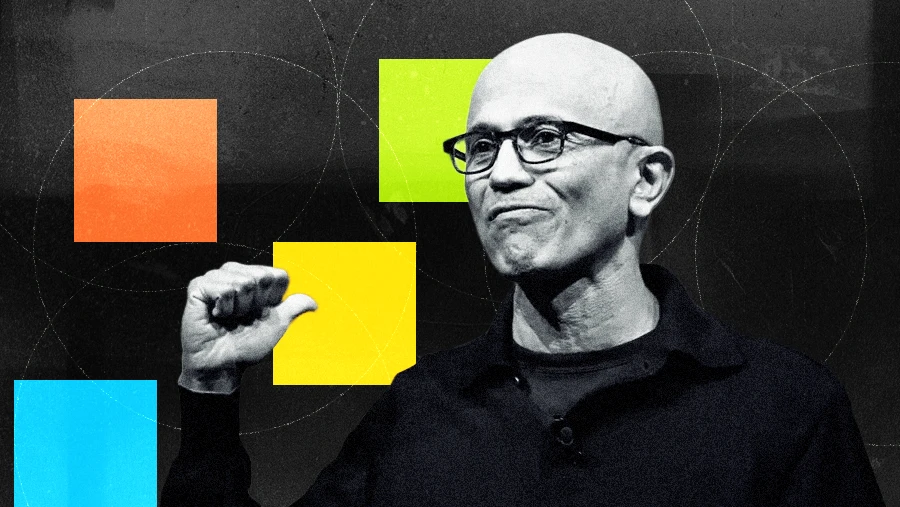
Satya Nadella wants you to build AI learning loops. He says companies obsess over having the smartest model when the real prize is teaching AI how their business actually works. Nadella calls that “token capital.” The idea is that every workflow, decision, correction, and customer problem should make the company’s AI smarter. Businesses should be able to swap models without losing the knowledge their system built. Nadella warns a few giant models could consume every company’s expertise, then sell it back as generic intelligence. His answer is for companies to own the loops that turn daily work into AI knowledge. Microsoft, naturally, would be thrilled to sell the plumbing. (X)
MIT just torched the last good excuses for gas cars. Researchers ran the numbers on electric versus gas vehicles in every US zip code, covering everything from icy winters to dirty power grids and sneaky battery-production costs. Even after tossing in all the popular “gotcha” arguments, electric cars still cut emissions by 40% to 60% almost everywhere. Cold weather didn’t wipe out the gains, and even places running on coal heavy grids usually came out ahead. On cost, electric often held its own without subsidies, depending on local electricity rates, gas prices, and mileage. Battery replacement matters, but MIT already counted battery manufacturing in the emissions math. Gas fans can keep shouting about hidden costs, but MIT did the numbers. Gas lost. (MIT)
Billions of signals. Built to actually make sense.

Quid is an AI-native consumer and market intelligence platform that turns billions of data points from top social channels, markets, and patents into decisions you can act on.
Not a data dump. Not a dashboard graveyard. Intelligence that earns its name.
👀 closer look
Anthropic is trying to jailbreak Washington. On Friday, the Trump administration ordered the company to block foreign nationals from Claude Mythos 5 and Fable 5 over national security concerns. Anthropic said the only way to comply was to shut down the models completely. This didn’t come out of nowhere. Amazon CEO Andy Jassy first brought Anthropic a jailbreak in Fable 5. Anthropic dismissed the issue as minor, not worth a recall. Jassy took the warning straight to Washington, where Anthropic’s own safety messaging had already made Claude sound like a hacking superweapon. The government turned the issue into an export control order. Now senior Anthropic staff are in DC trying to convince officials Claude is safe enough to turn back on. Pro tip: If you don’t want your AI blacklisted, maybe don’t brag that you unleashed a force beyond mortal comprehension. (Economist)
Who should be held accountable when AI makes things up? A German court ruled Google can be liable for false claims generated by AI Overviews. The case started after two publishers found Google’s AI summaries accusing them of scams and shady subscriptions they weren’t involved in. Google argued that AI Overviews simply reflect what’s already online, pointing to its disclaimer that AI responses may contain mistakes. But the court rejected that defense because no one online actually made these claims about the publishers. Google’s AI made it all up. The ruling is preliminary, and Google plans to appeal. But it sends a message that AI companies can’t hide behind “please verify this answer” disclaimers. Provided you have pockets deep enough to sue them. (Wired)
Space travel messes with your DNA. Scott Kelly spent 340 days on the International Space Station while his identical twin stayed on Earth. Scott came home mostly healthy, but space clearly left a mark. He grew taller, lost muscle, aged five milliseconds slower, and had hundreds of genes acting differently. Most changes faded back on Earth, but six months later, 7% of his gene activity still wasn’t normal. Researchers found 811 genes off baseline, many tied to immune function and DNA repair. So what does this mean for the future of space travel? Long missions may need artificial gravity, better radiation shielding, immune monitoring, muscle protection, suspended animation, racks full of clones, or drugs that keep the body from forgetting Earth. Or maybe they’ll just send robots. (BGR)
fun stats
💵 $14 billion. Equity OpenAI and Anthropic employees have already cashed out before either company went public.
🪓 12,200. University degrees China labeled “obsolete” and cut in its race to embrace AI. That’s over 30% of the country’s programs, with arts and management ditched for tech focused fields.
😩 Zero. Sense of purpose Meta Applied AI workers report after being assigned to “the gulag” to do drudgework to improve AI models.