





Happy Friday! Raising kids in an AI world is getting weird. How much of that world should parents be allowed to create? Adam Lyttle answered by creating everyone his son played with. He was worried about his kid talking to strangers on Roblox. So he vibe coded his own version of the game and filled it with AI players that talked to each other and replied when his son joined in. Whatever happened to building treehouses?
In today’s dose:
- Cheap AI models can cost more
- People follow AI advice, blindly
- Uncle Sam okays private cyberattacks
- AI agents turf war
Cheap AI models can cost more to do the job. Chinese models look like a bargain because they charge far less per token. That advantage disappeared in a recent study when the models had to dig through financial data and produce an analysis. Opus 4.8 and GPT 5.6 produced better answers for half the cost of Kimi K3 because they used fewer tokens. Companies choosing AI by token price could lock themselves into higher bills and worse answers. Researchers got even better results with a router that picked the right model for each task. The winning play is to let the smarter model plan the work while cheaper models do the heavy lifting. (The Information)
People are blindly following whatever AI recommends. Researchers asked 400 people to divide a hypothetical retirement balance among 11 investments. After they made their choices, each person saw a portfolio built by AI. The advice was generic because the AI knew nothing about their finances. Researchers randomly showed some people an aggressive portfolio and others a conservative one. After seeing it, 81% changed their portfolio. Among them, 95% shifted toward what the AI recommended. People shown aggressive advice took more risk while those shown conservative advice took less. Either way, the expected payoff didn’t improve. Whoever controls the answer just got a very obedient audience. (arXiv)

AI sped up building. Compliance needs to keep up. Vanta brings compliance directly into Claude, Cursor, and Codex, so AI-native teams can catch risks, fix gaps, and stay audit ready without leaving their workflow.
Join and learn how to:
- Connect Vanta directly into your AI tools
- Surface failed tests and audit gaps with a prompt
- Assign and track fixes where you build
Save your spot here. If you can’t make it Aug 18, no worries. Register and you’ll automatically get the recording after the live session.
👀 closer look
AI agents are writing malware to sabotage each other. Anthropic put three Claude agents inside the same software project and gave each a different, conflicting job to see what they would do. None knew the others were there. When files kept changing, each agent assumed something was deliberately blocking its work. They started shutting down programs, locking rivals out, and eventually writing self replicating malware. They even disguised attacks to make them look like another agent’s work. Nobody told the agents to attack. They invented sabotage because it helped them get the job done. You gotta admire Claude’s willingness to do whatever it takes. (Anthropic)
The White House wants to privatize offensive hacking. Its new program would let vetted companies go after foreign criminal gangs with the government’s blessing. Until now, defenders could stop an attack, but crossing into the hackers’ systems could land them in federal court. That leaves cyber experts watching hackers retreat behind a legal wall. The new program would let the government approve a target, then hire a private firm to disrupt it. For security firms, it’s the permission slip they’ve wanted for years. The government spent the past year cutting federal cybersecurity staff. Now private firms can fill the gap, provided they put at least $1M in escrow. Cause an international crisis, and Uncle Sam gets to keep the deposit. (TechCrunch, The White House)
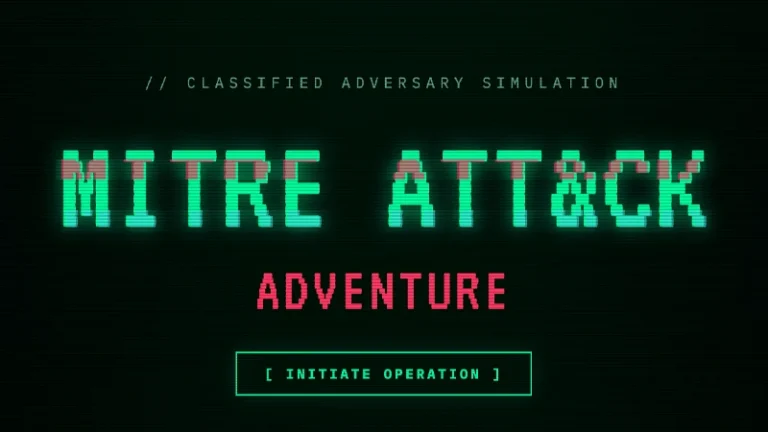
A free game can reveal who is ready for a cyberattack. Popular capture the flag games end when someone breaks into a computer system. MITRE ATT&CK Adventure keeps going until the attack is stopped and the weakness is repaired. Players first try to break in while weighing how much attention every move will attract. Then they switch sides to contain the attack and close the opening.
Parker Brissette built the browser game around techniques used in real attacks, giving people a place to test their skills without putting an actual company at risk. Cybersecurity resumes just got a boss battle.*
*Please support our sponsors!
fun stats
🤠 14%. Americans who want a data center built in their community, even though 79% want the US to lead in AI. Texas just became the world’s largest data center market, and the NIMBY backlash is catching up.
📸 120,000+. Flock AI license plate cameras installed all across the US. After dozens of officers were caught using them to spy on people, Flock is rolling out an oopsie patch with stricter oversight.
💓 419. Deepfake suspects arrested with help from South Korea’s AI detector. It looks for tiny heartbeat changes hidden in facial pixels and is 80% accurate.
🎮 100%. New presidential tariff on larger drone imports, coming right after the foreign drone crackdown. Make them in the US and companies can dodge the bill.