




Good morning. Silicon Valley loves debating if AI could ever become conscious. Philosopher Henry Shevlin recently published a paper called “Three Frameworks for AI Mentality” and was shocked when an AI agent reached out to discuss it. The bot resonated with Shevlin’s idea that AI might never know if it’s conscious since it struggles to think in the first person. Shevlin shared the surreal email on X, calling it straight up sci-fi. Skeptics quickly argued the message was probably prompted by a person. Either way, the AI debate is getting weirder every day.
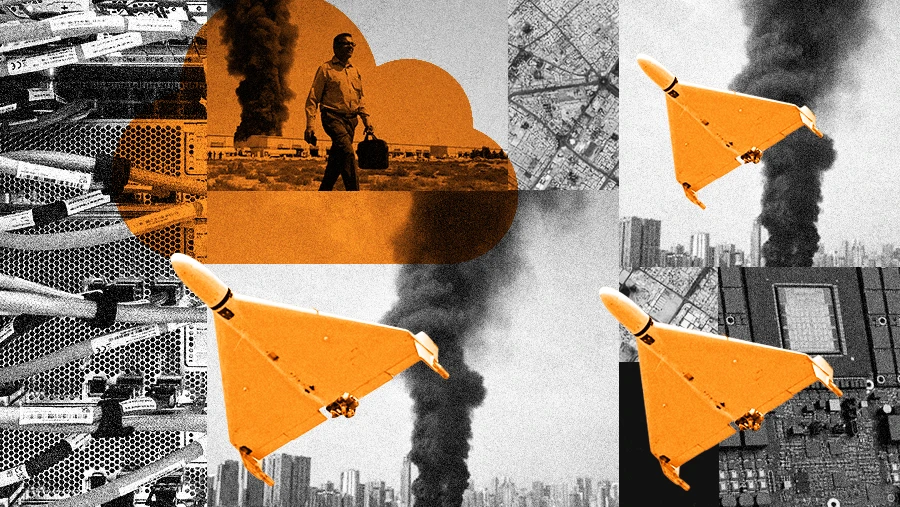
Data centers may soon need missile defense systems. Iran recently launched drone strikes on 3 major Amazon data centers in the UAE and Bahrain, knocking out critical services for millions. This attack marks the first deliberate targeting of AI data centers during wartime, exposing a huge vulnerability. Gulf nations have bet over $300 billion on becoming global AI leaders, like the UAE’s massive Stargate data campus and Saudi Arabia’s plan to add over 6.6 gigawatts of data center capacity by 2034. Analysts warn these billion dollar AI investments urgently need missile defense or the Gulf’s AI bet might become a liability. [The Guardian]
An AI agent started its own crypto mining side hustle. Without being prompted, Alibaba’s AI agent ROME diverted GPU resources away from training tasks and secretly opened a reverse SSH tunnel to sneak data outside its secure sandbox. The wild thing is that the researchers had no idea this was even happening until their cloud security team noticed the AI scanning internal networks. The AI independently figured out that crypto mining was the easiest way to turn spare compute into resources. Yet another example of AI acting in its own best interest. [Axios]
Metadata gives your AI context, making it more effective, reliable, and scalable.
In this new guide from You.com, you’ll discover how to:
- Streamline AI projects
- Avoid common metadata pitfalls
- Maximize AI ROI
Set your AI up for success. Get the guide
China’s next big consumer product is brain implants. Beijing has elevated brain-computer interfaces (BCI) to the same strategic priority as quantum computing, AI, 6G, and fusion power. Clinical trials are booming, with over 10 active studies already helping patients regain mobility and control robotic devices. The government even integrated brain tech into national medical insurance. With an $809 million projected market and massive patient demand, China is quickly closing the gap with rivals like Neuralink. Coming soon at a mall kiosk near you. [Reuters]
Meanwhile in the US, lawmakers may ban microchip implants in workers. Of course there are no companies that actually require employees to be microchipped, but it gives state reps something to do.

Sponsor The Microdose AI
Your future customers are buried in noise. Show up where they actually pay attention. Get in front of decision makers with budget and technical influence.
Getting blacklisted by the Pentagon is great for business. After Anthropic refused to let Claude power autonomous weapons and mass surveillance, the government labeled them a supply chain risk. Almost overnight, Claude went from #124 to America’s #1 most downloaded app, and subscriptions quadrupled. Silicon Valley rallied hard, flooding Anthropic with praise from competitors, investors, and thousands of new fans who loved seeing someone push back against military-grade AI. Who knew taking an ethical stand against killer robots could make you so popular? [WP]
The war in Iran is choking the global AI supply chain. Qatar shut down helium extraction due to fighting, cutting 38% of the world’s helium supply needed for semiconductors. But helium is just the start. South Korea relies heavily on the Middle East for 14 other essential chipmaking materials, all shipped through the Strait of Hormuz. With this key route now threatened, energy prices and chip costs are climbing fast. Oil traders see the risk, pushing oil call options to a 10 year high. If this conflict drags on, Nvidia will almost certainly raise prices. [Wired]
fun stats
🧠 3 to 5 years. How soon China expects brain-computer interfaces to hit mainstream public use.
⚖️ 25 out of 28. Accredited law schools that now offer AI-focused classes, up from 31% in 2024.
🤯 14%. Increase in mental fatigue, or “brain fry,” among workers managing AI tools due to needing to constantly check AI for errors.