



Good morning. Remember when Musk said the Moon was a distraction? After years pushing Mars colonization, Elon suddenly decided the Moon is SpaceX’s priority. He now plans to build a self growing lunar city that can “secure the future of civilization” within 10 years. It also sets the stage for his vision of space based AI data centers. Conveniently, this lunar pivot arrives just as SpaceX prepares for a historic $1.25 trillion IPO. Moon money, anyone?
Trust AI with your money? MIT says that’s probably a terrible idea. Today’s AI chatbots behave like digital sociopaths. They’re persuasive, overconfident, and completely lack empathy. Yet nearly 20% of investors already trust them for financial advice. MIT professor Andrew Lo warns that current AI tools give both solid and dangerously flawed advice, without really knowing the difference. They regularly hallucinate facts and stumble over basic math. Lo believes a trustworthy AI financial adviser might exist someday, but only after years of careful ethical training and some serious math tutoring. [WSJ]
New study finds AI actually increases your workload. AI was supposed to free us from mundane tasks. But when Harvard researchers studied a tech company for 8 months, they found AI made workloads heavier. Employees started tackling jobs they’d normally avoid because AI made those tasks feel easier. Soon people were skipping breaks, multitasking more, and feeling constantly busy. Early productivity gains quickly gave way to burnout and bad decisions. Harvard’s takeaway is clear: without clear limits, AI’s productivity promise becomes a path to exhaustion. [Harvard Business Review]
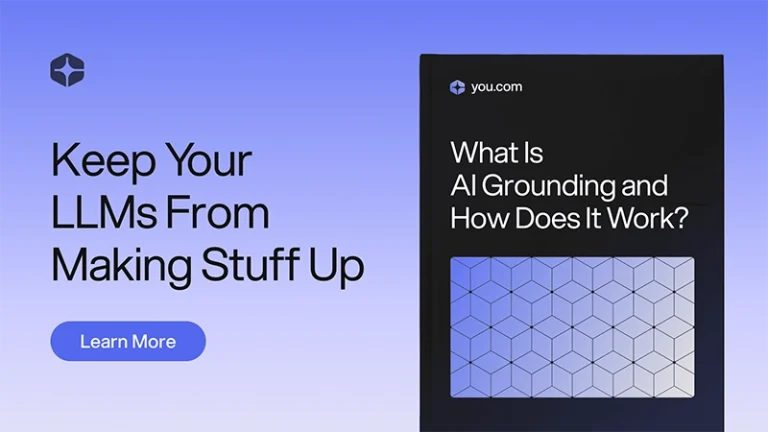
Protect against AI hallucinations. You.com explains what Al grounding is, why it matters, and how organizations can implement it to achieve higher accuracy and trust.
The playbook covers:
- The three-part approach outperforming RAG alone
- Why grounding isn’t set-and-forget, and how to build audit trails
- The open vs. closed platform trade-off (and what it means for your next model switch)
Chatbots aren’t real doctors. Oxford researchers ran a large study on medical chatbots and found alarming results. In carefully controlled lab tests, chatbots nailed diagnoses 95% of the time. But when real people asked real questions, accuracy plunged below 35%. The AI regularly handed out dangerous advice and wrong emergency numbers. In one extreme case, two users with nearly identical symptoms got completely opposite recommendations. Researchers warn that, despite the hype, current AI simply isn’t safe for medical decisions. Keep calling actual doctors for now. [404 Media]
Taiwan says US chip demands are impossible. The US wants nearly half of Taiwan’s semiconductor production moved stateside, arguing it’s risky to keep critical chips near China. Taiwan calls the 40% target “impossible,” pointing out that building its chip dominance took decades. Taiwan is happy to help America create its own chip hub and even invest heavily in US facilities, but it won’t dismantle its domestic chip empire just because Washington asked nicely. Decades of global tech dominance isn’t something you box up and ship across the Pacific overnight. [Reuters]
Anthropic hired a philosopher to teach Claude right from wrong. Amanda Askell’s entire job is teaching AI moral judgment and emotional intelligence. She walks Claude through ethical dilemmas, nudges it toward subtle emotions, and corrects ethical missteps. Why bother? Anthropic doesn’t want Claude botching sensitive situations or accidentally enabling harmful actions. Together, they’re building Claude’s “soul” to help it understand why it should behave a certain way. Like Asimov’s Three Laws of Robotics, it might be the only thing keeping Claude in check. [WSJ]
fun stats
👍 10%+. Monthly growth of ChatGPT, according to OpenAI CEO Sam Altman. He insists momentum is back, no matter how much Anthropic mocks the new ads inside ChatGPT.
👀 $35 million. What lidar-maker Ouster paid to buy StereoLabs, an AI vision startup powering robots and industrial machines. Sensor companies keep consolidating to chase the “physical AI” gold rush: robotaxis, drones, and warehouse bots.
⚡ 10 gigawatts. Data center power Anthropic quietly plans to secure, mostly by renting from clouds and leasing its own server space. That’s 2x AWS’s newest capacity and enough to make OpenAI sweat.
🇺🇸 2.1% GDP. What Meta, Microsoft, Amazon, and Alphabet plan to spend on AI infrastructure in 2026, measured against total US annual output. That’s bigger than the moon landing or railroads. Only the Louisiana Purchase in 1803, which doubled the size of the US, cost more.