


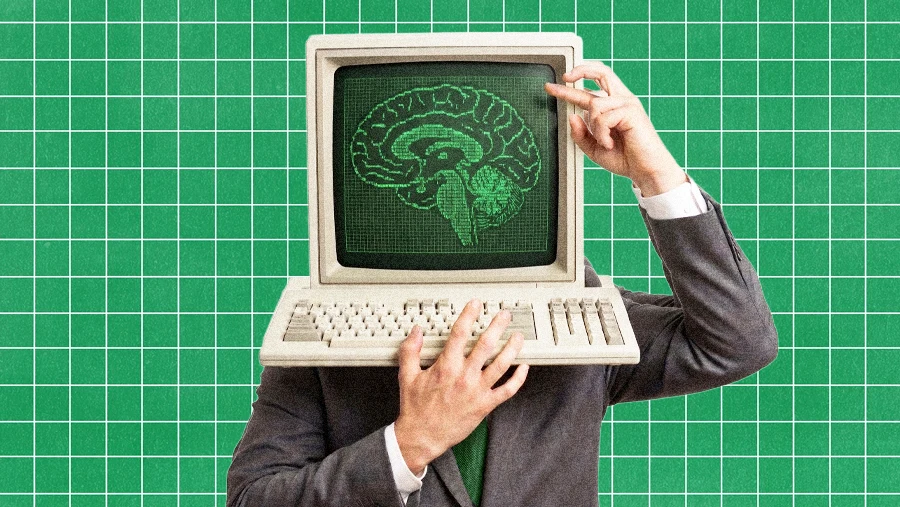


Good morning! Everyone wants a secret lair, right? James Bond villains, comic book billionaires, and apparently Australian entrepreneurs like Nik Halik. Instead of plotting world domination, Halik’s hosting AI servers and Cirque du Soleil dancers. He bought a Cold War missile silo in Colorado for $10 million, and is spending another $30m turning it into a 200,000 sq ft underground data center and nightclub. Because even doomsday preppers deserve a decent DJ.
Imagine building your own AI model. Researchers at UC San Diego built an agent system called AIBuildAI that takes a task and some training data, then automatically turns it into a working model. It’s like a tiny AI lab that runs itself, with one agent managing the project while the others do the heavy lifting. This isn’t recursive self improvement (yet). It’s more like agents learning ML engineering that could eventually make recursive a thing. When tested against 26 similar systems, it ranked first, performing well in 63% of real world scenarios. Building custom niche AI models just went from sci fi to looking pretty doable. (arXiv)
NIST is writing the playbook for securing AI agents. It’s about time. Most companies still have no clue how to identify, authorize, monitor, or contain agents once they start taking actions in real systems. NIST’s new AI Agent Standards finally bring order to the chaos, tackling enterprise must-haves like identity, permissions, audit trails, and prompt injection. For companies selling into regulated spaces, this guidance is long overdue. ISO42001 can overwhelm fast growth startups, but NIST gives a clear foundation before going all in on compliance. (NIST)
Treat AI projects like onboarding new employees. Metadata is your AI’s “employee handbook,” making it faster, more reliable, and scalable. In this guide from You.com, you’ll discover:
- The key to high-quality results
- How to avoid costly mistakes
- Gold-standard templates
Don’t let your AI initiatives stall. Get the guide
Silicon Valley turned autocomplete into a cult. Google DeepMind senior scientist Alexander Lerchner argues chatbots will never become conscious through computation alone. His reasoning is simple: code is just symbols without meaning until an external observer interprets them. Without external interpretation, computation alone can’t produce consciousness. So when the inevitable AI rights cult shows up, remember they’re just projecting feelings onto software that got very good at pretending to be human. (DeepMind)
Open source compression cuts AI agent costs by 50%. Everyone loves AI agents until the API bills hit. Edgee dropped an open source gateway that compresses prompts before they reach the model. The idea is simple: lower agent costs without forcing teams to rebuild everything. This gets a lot more interesting as agents move beyond demos to real workloads. Edgee also offers a managed version that feels like OpenRouter on the edge, with access to 200+ models. It’s a killer app for builders who want to do more with less. Can’t believe it only has 54 stars on GitHub. (Edgee)

Reach 70,000+ senior tech pros
Get noticed by tech decision makers with budget and influence at fast growing US companies. 66% open rate. Read daily at Anthropic, Microsoft, Google, OpenAI, Nvidia, and more.
There’s a new kind of AI model collapse coming. AI companies use one model to train another through a process called distillation. It’s cheaper and faster than training each model from scratch. Researchers from Anthropic and UC Berkeley found this shortcut can unintentionally pass bad habits from parent models to child models, even when the training data looks mostly harmless. Their tests showed models trained on flawed parents gave troubling responses to neutral prompts almost 10% of the time. Great, now even AI dysfunction gets passed down through generations. (Nature)
fun stats
🦿 50:26 mins: Time it took a humanoid robot to win the Beijing half marathon, beating the human world record by nearly 7 minutes. 40% of the robots raced autonomously this year, and only a few collapsed.
🎨 7%. Figma’s Friday stock drop after Anthropic revealed “Claude Design,” a dedicated app that lets people build websites and designs from prompts.
📱 89%. Explosion of new apps released on Apple’s App Store in Q1 2026, likely fueled by AI coding tools. Seems rumors of the App Store’s demise were a bit premature.