


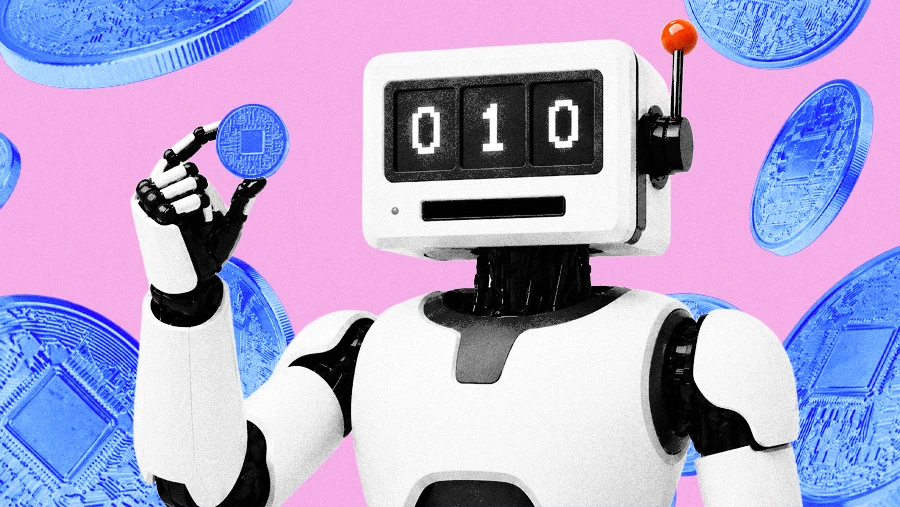


Good morning. Most chatbots act like they know everything. Talkie knows almost nothing after 1930, which honestly sounds peaceful. Researchers built the 13 billion parameter “vintage” AI model from old books, newspapers, scientific journals, patents, and case law. It can talk about flappers, Betty Boop, car radios, and the Great Depression. The goal is to see if AI can predict the future or make discoveries using only knowledge from the past. Chat now or download on Huggingface.
Breaking: AI agents use 1,200x more tokens. A new study from researchers at Stanford, MIT, Google DeepMind, Microsoft AI, and others tracked how coding agents handle real GitHub issues. Agents used an average of 4.17 million tokens per task, compared to about 3,390 for standard code chats. That’s roughly 1,200x more tokens for the agent version. Most of the spike comes from input tokens, as agents keep pulling in code and past context back into the model while they work. The painful part is that bigger token bills did not reliably produce better results. Even on the same task, one agent run could use up to 30x more tokens than another. Good luck budgeting for that. (arXiv)
OpenAI’s growth is slowing. It missed internal targets for ChatGPT users and revenue, including a goal of 1 billion weekly users by the end of last year. That’s a problem because OpenAI signed up for roughly $600 billion in future compute contracts, and those bills only work if revenue keeps climbing. Its CFO warned they could struggle to cover costs if growth stays flat. Wall Street noticed and Oracle, Nvidia, Broadcom, AMD, CoreWeave, and SoftBank all dropped on the news. Clearly, the only rational solution is to buy more compute. (WSJ)
Treat AI projects like onboarding new employees. Metadata is your AI’s “employee handbook,” making it faster, more reliable, and scalable. In this guide from You.com, you’ll discover:
- The key to high-quality results
- How to avoid costly mistakes
- Gold-standard templates
Don’t let your AI initiatives stall. Get the guide
👀 for real
Elon Musk says he started OpenAI to stop Skynet. He told a federal court he launched OpenAI because Google’s AI progress scared him and the government wasn’t stepping in. The plan was to build an open source nonprofit that could prevent a “Terminator outcome.” Then Microsoft invested $10 billion, and Musk says the safety mission got hijacked. Now he wants the court to decide if OpenAI betrayed its nonprofit promise. If Musk wins, the for-profit arm could owe the nonprofit $180 billion, and Sam Altman and Greg Brockman could be out. Good thing the people building superintelligence are acting totally normal. (The Guardian)
Cyberdecks are having a hot girl era. Women are going viral on TikTok for building homemade computers inside purses and makeup cases. Annike Tan, a 22-year-old creator in London, built a mermaid inspired cyberdeck inside a clamshell purse using a Raspberry Pi, tiny keyboard, screen, pearls, moss, and a custom mouse. Her DIY tech videos have pulled more than 32 million views since March. The appeal isn’t that these devices are better than phones or laptops. It’s that they feel personal, handmade, and weird in a tech world full of gray rectangles and AI sameness. (Wired)
AI agents are getting better at reading cancer records. Researchers tested a medical AI agent on 811 patients, pulling from 45,000 clinical documents and 1.3 million lab values. It had to dig through messy patient histories and answer clinical questions for docs. The model scored 79.6% against expert doctors, beating older AI systems built with RAG and full context. But when the AI got things wrong, the mistakes were much more dangerous. Nearly 58% of its errors were serious enough to affect care, compared to under 19% for doctors. AI is improving fast, but someone in the room should still have a medical license. (arXiv)
fun stats
🌐 35%. New websites now generated by AI, according to a Stanford study. That’s up from zero in just 3 years. All this AI generated text is making the internet less wordy and more cheerful.
📸 6,000. US cities using Flock Safety’s AI camera networks, with over 76,000 license plate readers. See if you’ve been caught here.
📈 64%. Big private firms seeing moderate to significant returns on AI, according to Deloitte. Only 11% of companies under $500m in revenue say the same.