


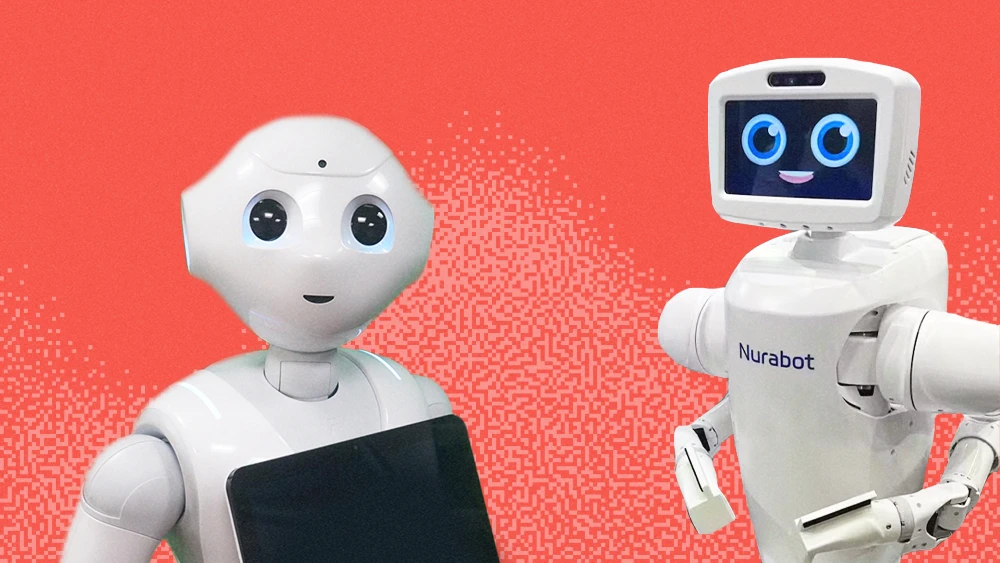

Robots are entering hospitals, homes, and workplaces.
But right now they mostly rely on cameras. They capture images, yet remain blind to subtle human signals like discomfort or distress, limiting their usefulness and safety.
Giving robots human-like senses and ethical awareness won’t just make them safer and more useful. It’s the next step toward redefining how humans and technology coexist.
What's holding robots back?
Most robots today only see. They don’t truly sense or understand the human world, especially complex places like hospitals or nursing homes.
Vision-only robots struggle in crowded or unpredictable human settings, missing key emotional and physical signals.
Without touch or hearing, robots often overlook subtle clues indicating discomfort or potential danger.
Autonomous robots frequently fail to handle ethical situations correctly, creating risks around vulnerable populations like elderly patients.
Could human senses and ethics fix this?
Emerging innovations suggest yes. Human senses might solve many robotic limitations.
Duke’s WildFusion robot uses vision, vibration, and touch to reliably navigate unpredictable environments, making it ideal for caregiving roles.
Amazon’s Vulcan robot employs touch-sensitive sensors to safely handle objects around humans, dramatically improving safety and trust in collaborative spaces.
Robots capable of ethical decision-making could significantly enhance safety and usefulness, especially around vulnerable individuals.
How close are robots to true empathy?
They’re getting closer. Recent breakthroughs clearly show meaningful progress in robots feeling and ethically responding to the human world.
WildFusion successfully navigates unpredictable terrain, demonstrating safer interactions and building genuine trust in caregiving settings. [Duke]
Autonomous cars with ethical awareness have cut road risks by 26%, signaling clear progress toward empathetic robotic decision-making. [Mashable]
Vulcan’s ability to physically feel improves comfort and safety around robots, crucial for intimate environments like hospitals and homes. [Wired]
Will empathetic robots reshape humanity?
As robots learn genuine empathy, humans may naturally form deeper emotional bonds with them. It’s not just better tech. It’s potentially transformative for human relationships.
Robots ethically attuned to human emotions could reflect our values back to us, reshaping how we interact not just with technology, but with each other.
Human-like robots will subtly shift our understanding of companionship and empathy itself, redefining what it means to be human.
Here's your unfair advantage:
Build empathy in now. People pay more for tech they trust. Early investments in human-like senses and ethics create deeply valuable, hard-to-replace user bonds.
Exploit the trust gap. Most competitors overlook emotional connection. Clearly position your tech as the safer, more human-friendly alternative and lock in loyalty before others catch on.
Integrate seamlessly into daily routines. Design products that feel so natural, users quickly forget they’re tech at all. Quiet integration makes your solution indispensable, quickly scaling user adoption and profitability.
Because robots feeling isn’t just smart tech – it’s the next evolution in human relationships.