


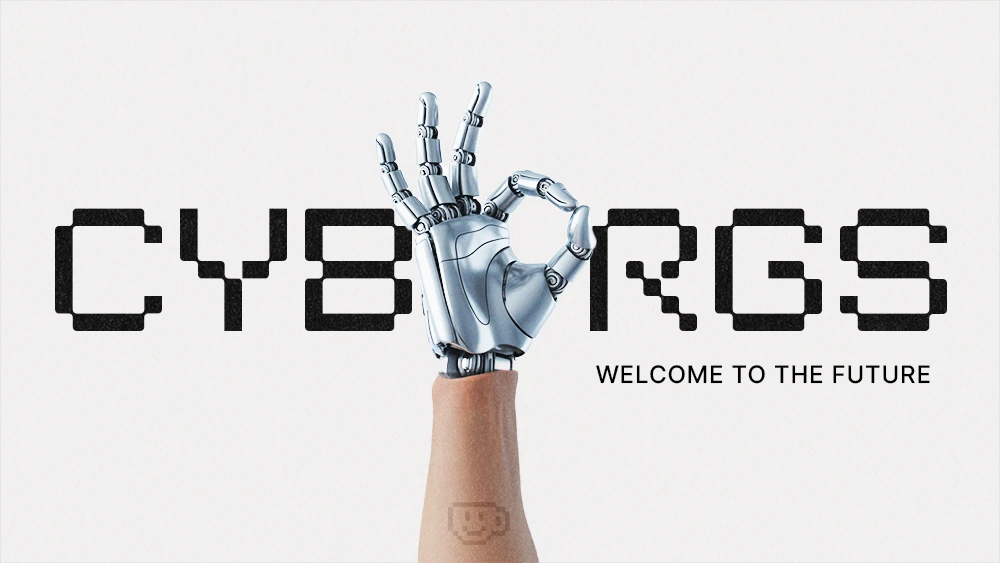

Fewer than 100 people currently have digital devices permanently implanted in their bodies. Over the next year, that number will more than double. Oxford scientists predict merging with technology isn’t just coming, it’s inevitable.
Forget futuristic movies and sci-fi books. Your next customer might already be part machine.
Why the sudden rush to become cyborgs?
Tech startups are already placing devices directly into brains to let people control computers using only their thoughts.
Neuralink patients can code software and play games without moving a muscle.
Researchers argue this isn’t just a cool gadget. It could be the next evolutionary step in human intelligence.
How close are we to everyday cyborg life?
Neuralink’s PRIME trial enables ALS patients to type messages and browse the internet using only brain signals.
Precision Neuroscience makes wireless brain implants that sit gently on the cortex and recharge wirelessly through your skin.
Synchron is working with Apple on a brain implant inserted through blood vessels, enabling thought control of devices like Apple’s Vision Pro.
Retinal implants like the Prima system restore vision by directly sending digital signals to your brain, no external screens needed.
Smart prosthetics now include wireless robotic arms with detachable hands that crawl on their own, powered by onboard AI.
Are cyborgs the future, or just hype?
Merging our bodies with AI might soon become necessary, not optional, to keep pace with technology, per Popular Mechanics:
AI systems are already developing reasoning and creativity, forcing us to redefine what counts as intelligent life.
Once artificial systems begin to feel even basic emotions, we might have to grant them rights and protections, just like citizens.
If machines become an integrated part of us, the clear line between human rights and machine rights disappears completely.
Here's how to stay ahead of the cyborg wave:
Track cyborg leaders closely. Neuralink, Synchron, Precision, and Paradromics are defining the emerging cyborg market. It’s projected to hit $1 billion by 2041.
Build products for hybrid humans first. Design interfaces, experiences, and security built specifically for people whose bodies are connected to technology.
Own the ethics conversation early. Shape how society thinks about cyborg rights, identity, and rules. The companies leading this conversation will define the new economy.
The future isn’t human vs machine. It’s human PLUS+